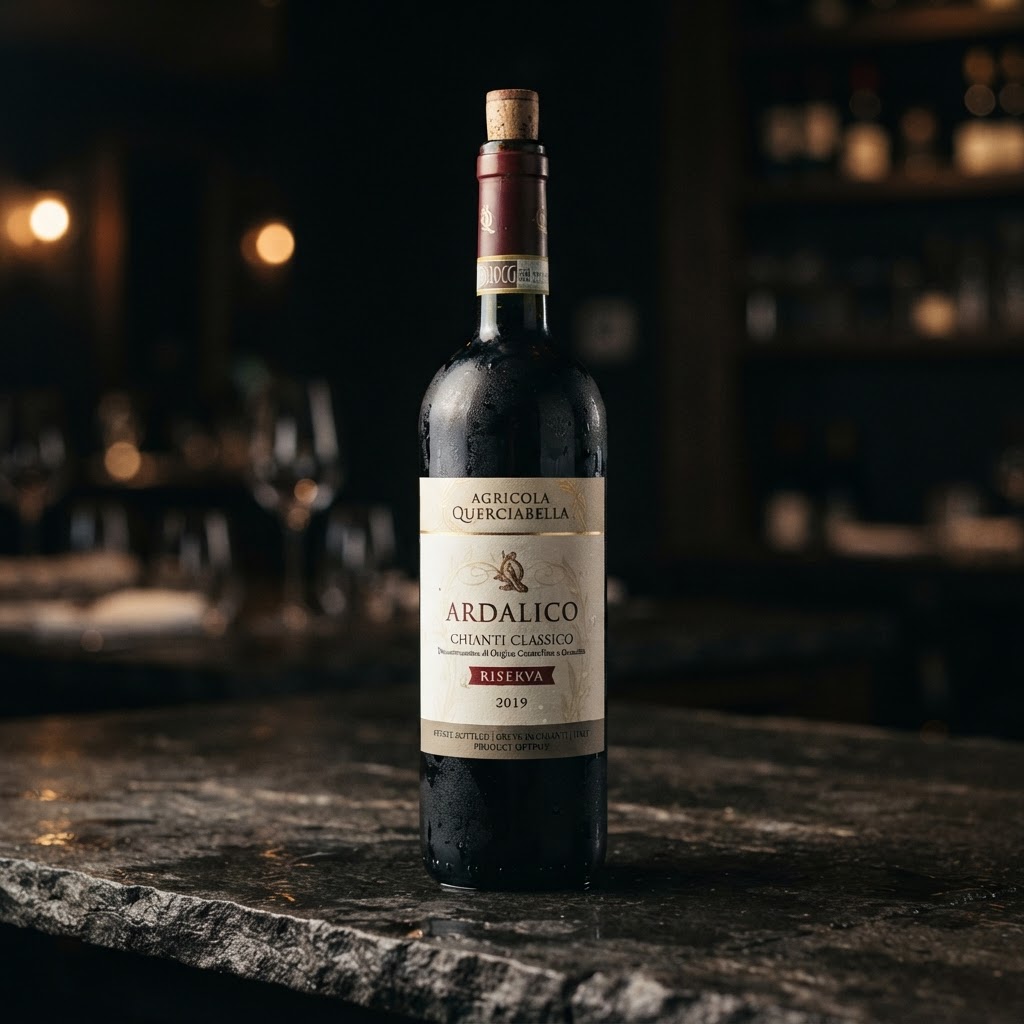
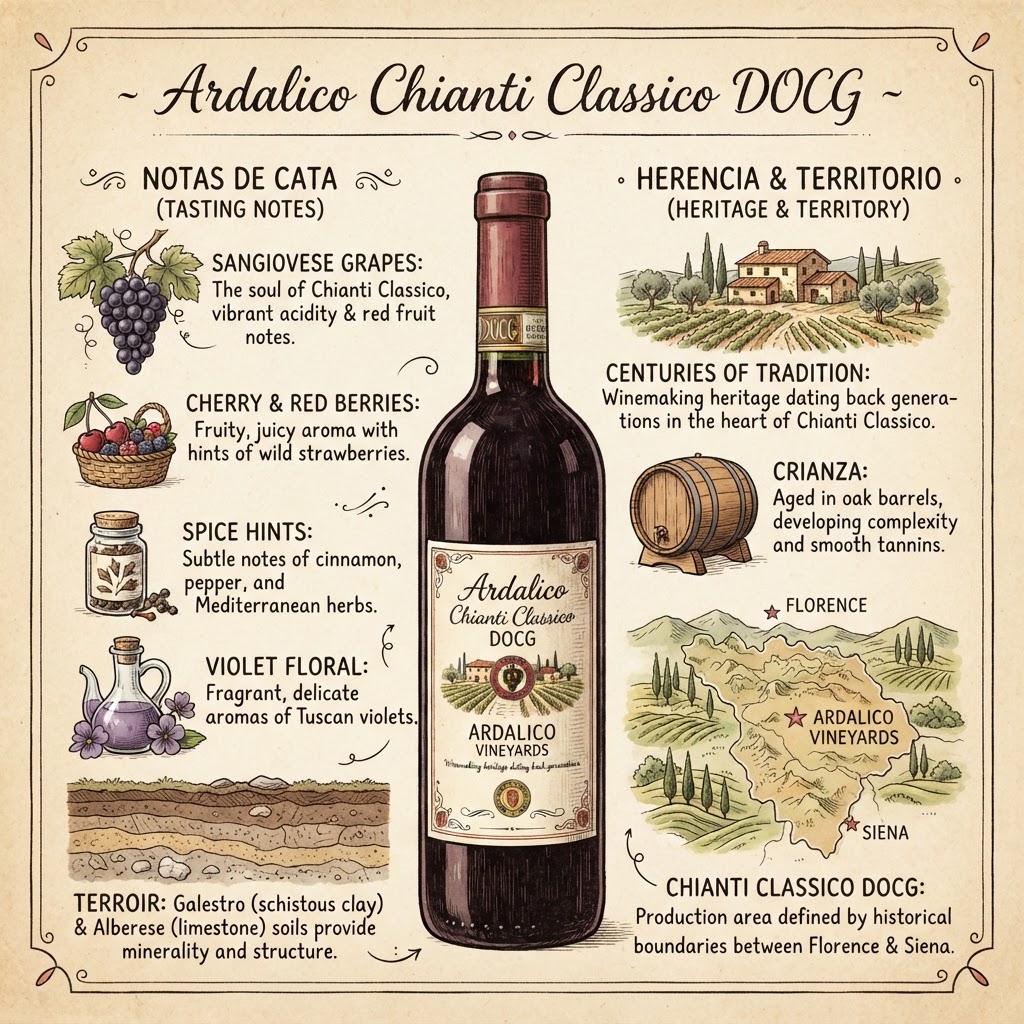
Querciabella farms its Sangiovese on the hills between Florence and Siena, in the part of Tuscany that has the longest standing claim to the grape. The estate bottles this as Ardalico, a Chianti Classico from the 2019 vintage, and the wine shows the grape in its most direct form: red cherry, leather, tobacco, dried herbs, tannins that grip without weighing the wine down.
- Sangiovese, the grape Chianti Classico is built on.
- Chianti Classico DOCG, the original zone, Florence to Siena.
- 2019, a warm, even vintage across Tuscany.
- 13.5% ABV, medium body, dry.
- High acidity, medium tannin, firm finish.
How it is made
Chianti Classico DOCG rules allow only Sangiovese, or Sangiovese with a small share of other permitted red grapes, and require the wine to be aged before release. The grape itself is thin-skinned and late-ripening, which is why the zone sits where it does: the hills between Florence and Siena give it the long, cool run into autumn it needs to build colour and acidity at the same time.
How it tastes
Red cherry leads, then leather and a tobacco note that comes in behind it. Dried herbs sit on top rather than underneath. The tannins are medium but firm, and the acidity is high, which is what keeps the fruit in focus instead of letting it sit heavy. It is dry, medium in body, and finishes with a grip that lingers.
Where it comes from
The Chianti Classico zone is the oldest defined part of Chianti, and the one allowed to put the black rooster on the neck of the bottle. The hills run from the outskirts of Florence down to Siena, mostly clay and limestone with a good deal of stone. Altitude matters here, and so does the fact that the zone was drawn on the land rather than on a map.
Good to know
Chianti and Chianti Classico are not the same wine. The Classico zone sits inside the older, smaller boundary, and only wines from there carry the black rooster seal on the neck. The rest of the region makes wine under the plain Chianti DOCG.