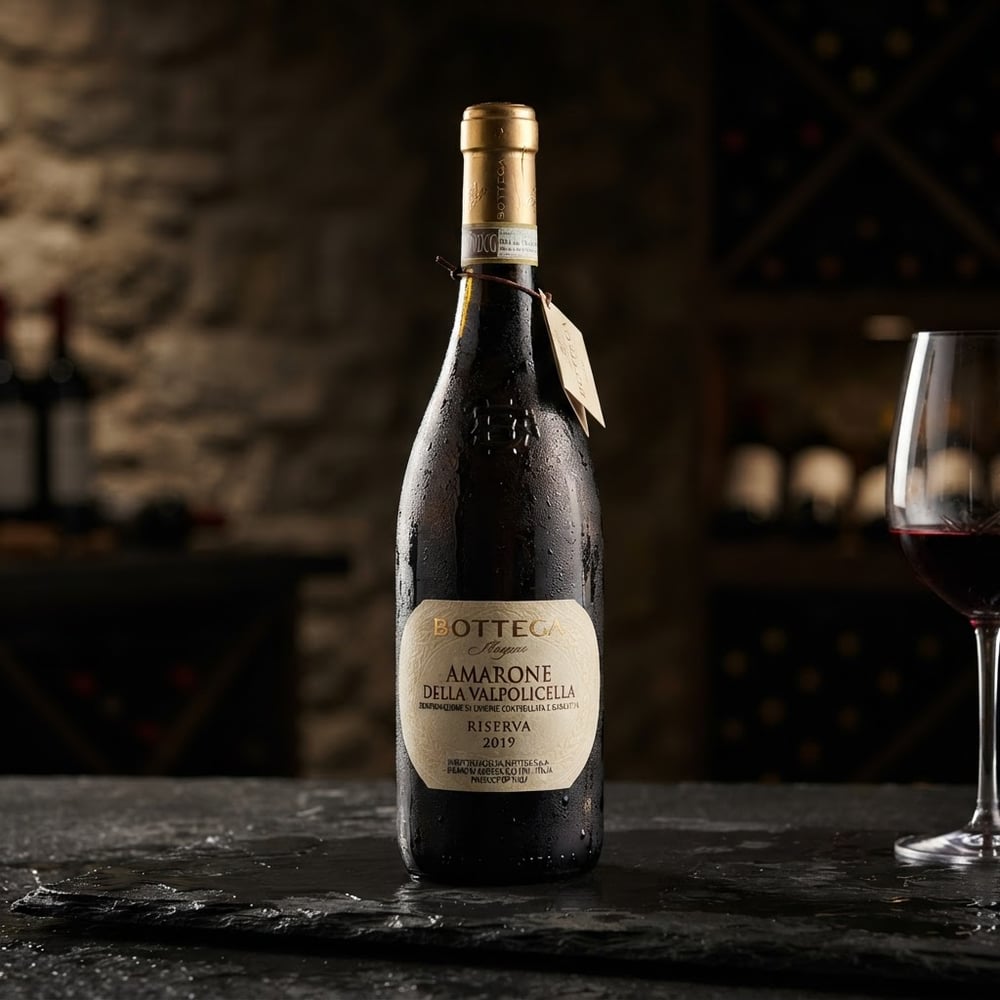
Amarone is the wine Valpolicella makes when it stops being light. Bottega, a Veneto producer, works the same hills and the same grapes, but the method changes everything: Corvina Veronese, Corvinone, Rondinella and Molinara are picked and laid out to dry through the winter before pressing. What comes out is full bodied, high in tannin, dry on the finish, and 15% strong. The 2019 vintage is in the bottle.
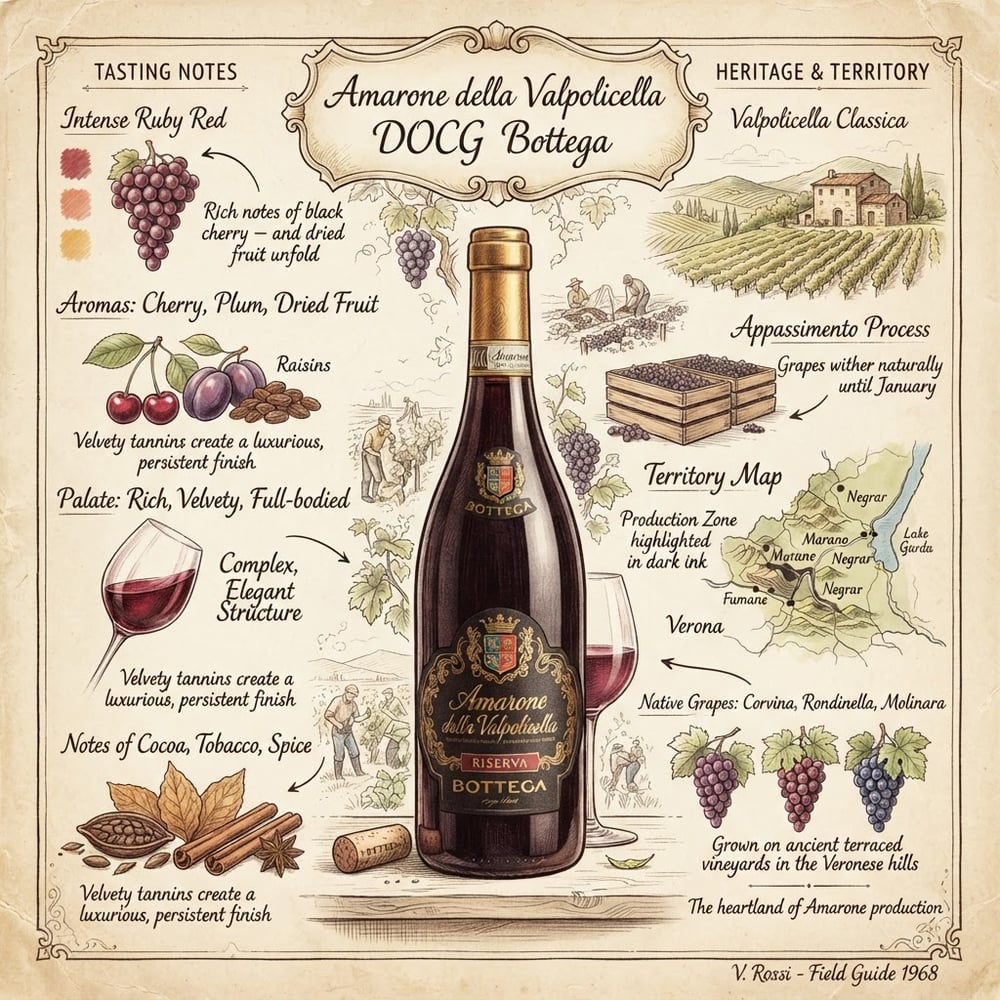
- Amarone della Valpolicella DOCG, Veneto, northern Italy.
- Corvina Veronese, Corvinone, Rondinella, Molinara.
- Dried cherry, bitter almond, dark chocolate, tobacco.
- Full body, high tannin, medium acidity, dry.
- 2019 vintage, 15% alcohol, 750ml.
How it is made
The grapes are dried after harvest, traditionally on wooden racks in well-ventilated rooms, for months, until they lose around a third of their weight. Sugar, flavour and tannin concentrate in what is left. Only then does fermentation begin. The appellation requires a minimum ageing period before release, and the wine must be dry. That drying step is the whole difference between Amarone and the lighter wines of the same valley.
How it tastes
Dried cherry and bitter almond first, then dark chocolate and tobacco. The tannins are firm and the body is full, but the wine is dry, not sweet. Medium acidity keeps it from feeling heavy. The alcohol sits at 15%, which is normal for the style and part of what gives it weight.
Where it comes from
Valpolicella sits north of Verona, between Lake Garda and the Lessini mountains. The hills are a mix of limestone, clay and volcanic soils, and the grapes grown there are the same ones used for the valley's lighter reds. Amarone takes those grapes and pushes them somewhere else entirely.
Good to know
The name means "the great bitter" in Italian, a reference to the dry, slightly bitter finish that distinguishes it from Recioto, the sweet wine made from the same dried grapes. Both come from the same method and the same hills. The difference is whether fermentation is stopped early or allowed to run dry.