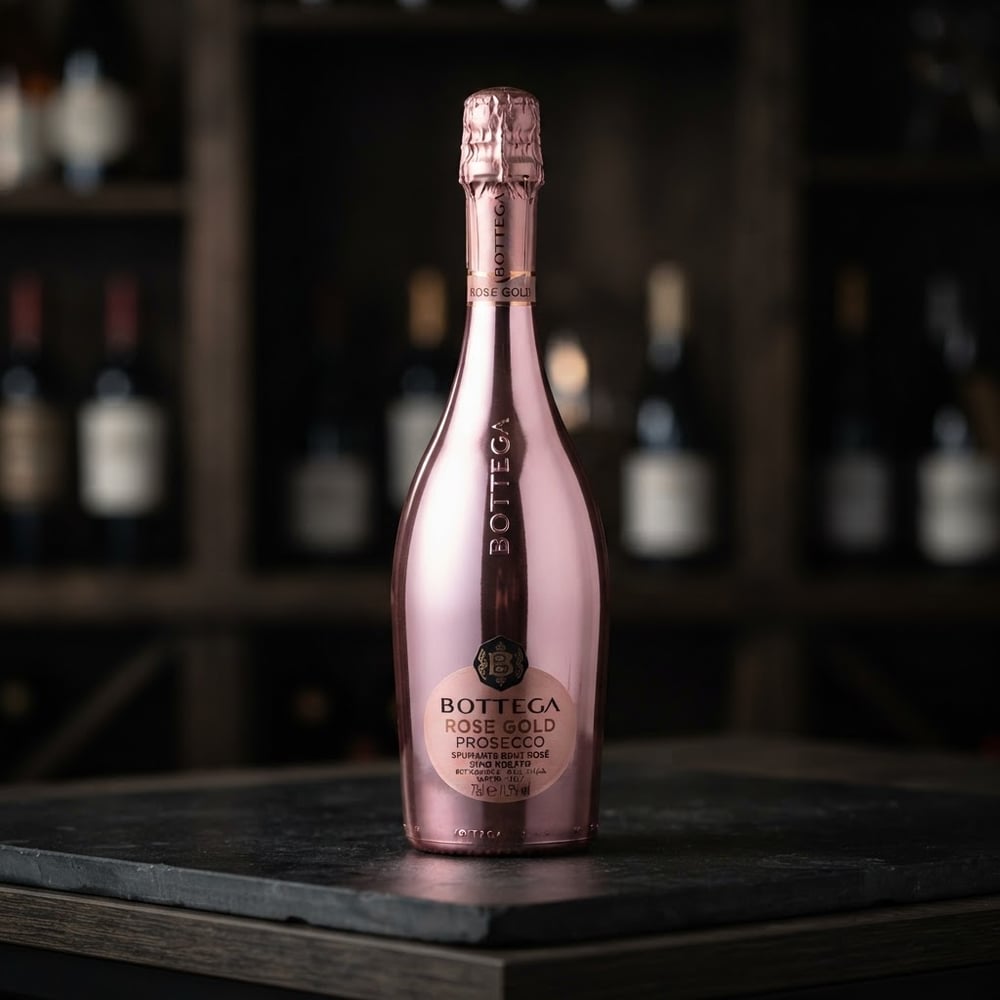
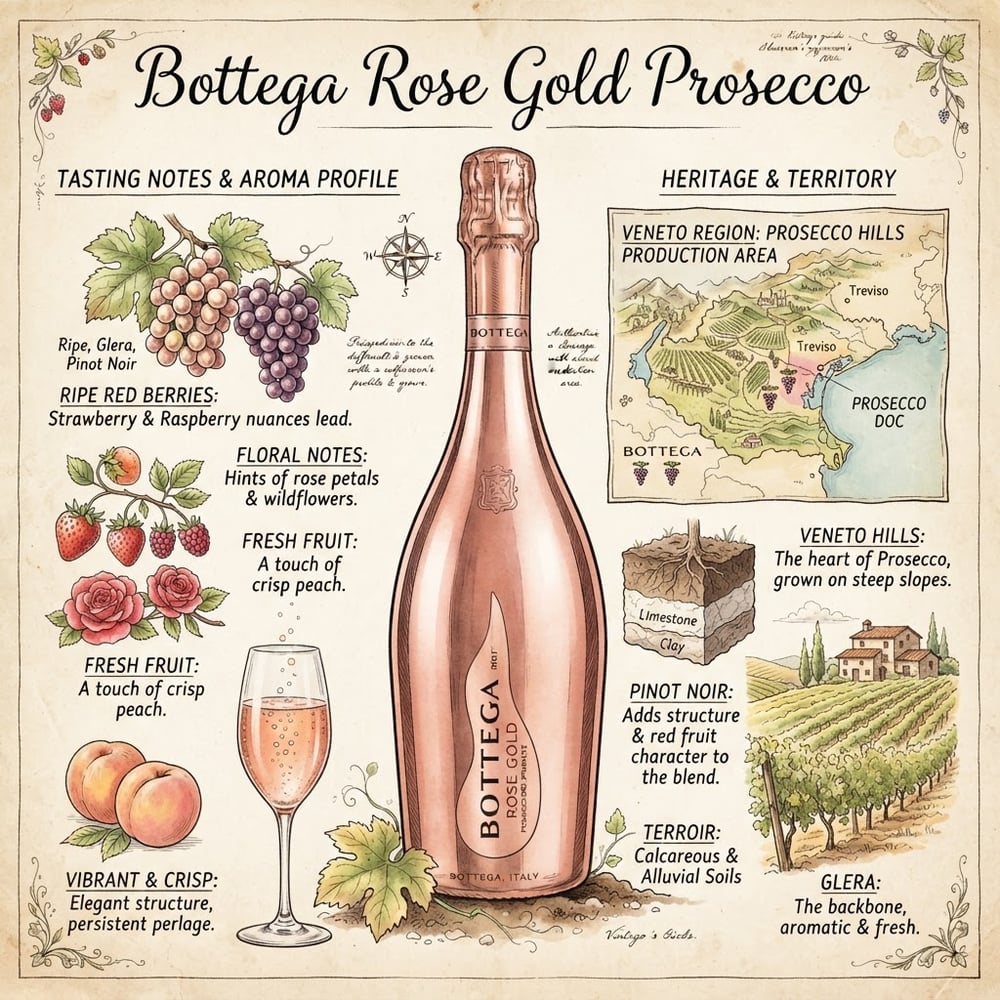
Bottega makes this in the Veneto, from Glera, the grape behind Prosecco, and gives it just enough time with the skins of red grapes to pull a pale pink into the glass. Rosé Prosecco has only existed as a recognised style since 2020, when the rules were changed to allow it.
- Glera, the grape of Prosecco.
- Veneto, north-east Italy.
- Off-dry, with a light body.
- Pink from brief skin contact.
How it tastes
Rose petals and raspberry, as the nose suggests, over the green apple and white peach that Glera gives anyway. The sweetness sits low, so the fruit reads soft rather than sugary, and the bubbles stay fine and persistent to the end.
How it is made
Prosecco is made by the tank method, not the bottle. The second fermentation happens in a large sealed tank, which keeps the fruit aromas intact and the pressure gentle. For the rosé version, a small amount of red grape skin contact goes in before that, and the result is a wine that is pink rather than red, sparkling rather than still.
Good to know
Prosecco takes its name from a village near Trieste, and the DOC covers a wide stretch of the Veneto and Friuli. The Glera grape was itself called Prosecco until 2009, when the name was reserved for the wine and the grape was renamed to protect the region.