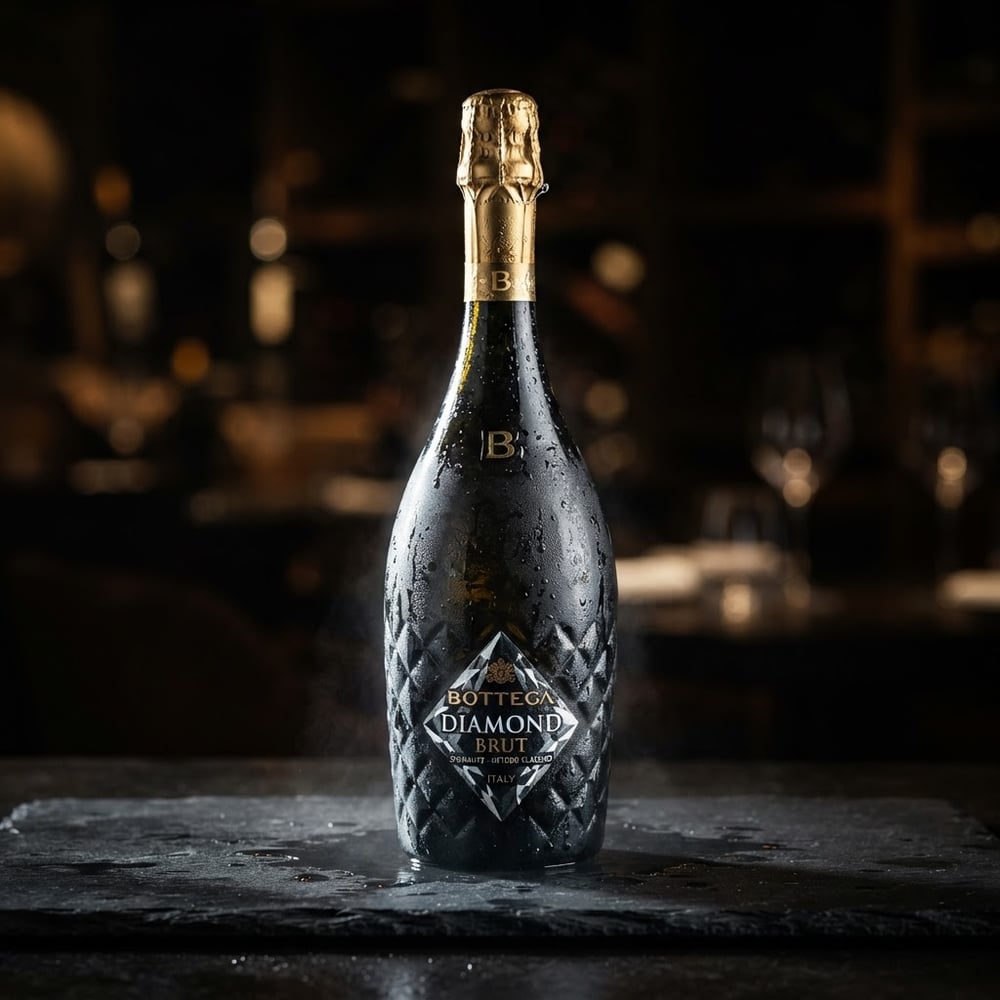
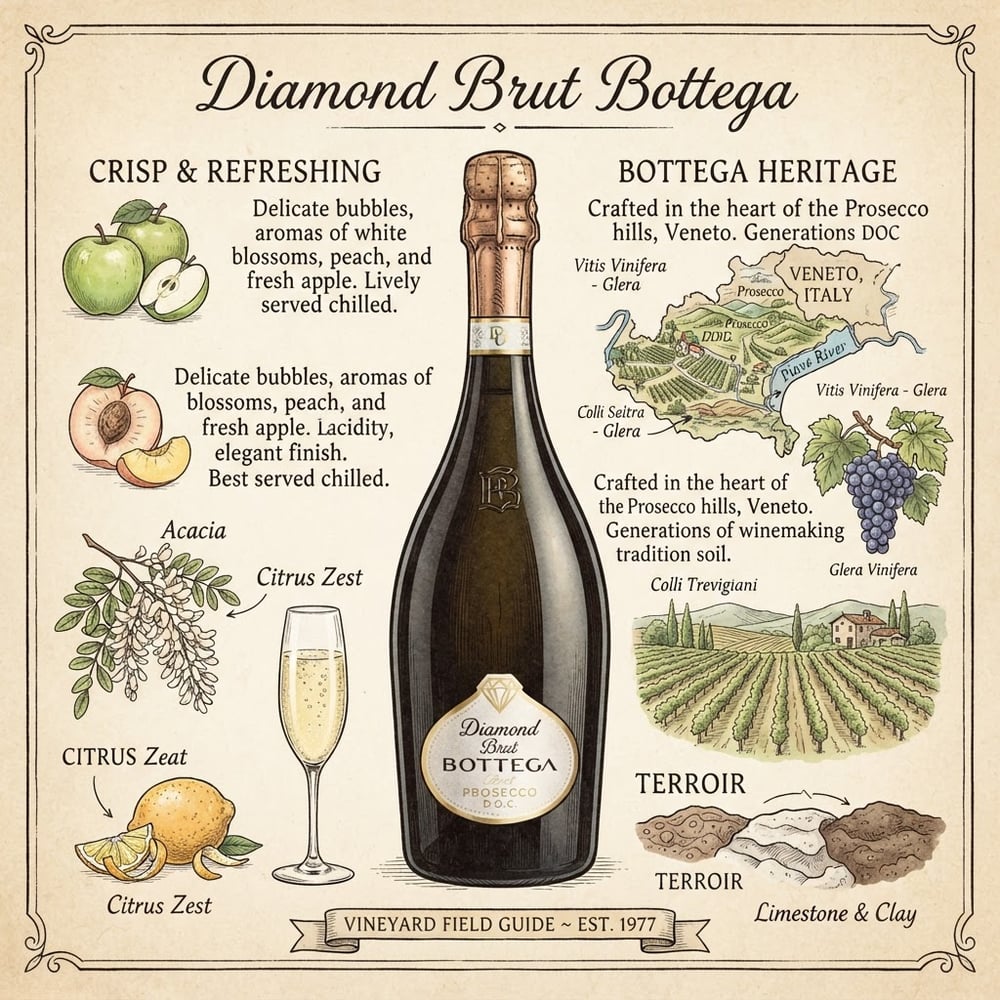
Bottega makes this in the Veneto, in Italy's northeast, from Pinot Nero grown on the hills between the Dolomites and the Adriatic. It is a sparkling wine in the brut style: dry, light in body, high in acidity, 12% alcohol. The fruit comes off the skins early, so the wine stays pale and the tannin stays low, and the second fermentation happens in the bottle, which is where the fine, persistent perlage comes from.
- Pinot Nero, the grape behind it.
- Veneto, North Italy.
- Brut: dry, no sweetness to speak of.
- Light body, high acidity.
- 750ml, 12% alcohol.
How it tastes
Straw-yellow and bright in the glass, with a fine, persistent perlage. Green apple and white peach come first, then brioche and a soft almond note on the finish. The bouquet is complex and refined, with a crusty bread and yeast character and a floral edge running through it. High acidity keeps the whole thing taut rather than soft.
Where it comes from
The Veneto runs from the Dolomites down to the Adriatic, and its hills have been making sparkling wine for well over a century. Pinot Nero is a Burgundian grape that settled here early and does two jobs: it makes still reds in the hills, and it goes into sparkling blends across the region. Grown for bubbles, it is picked earlier than it would be for red wine, which is what holds the acidity and keeps the fruit in the green-apple register rather than anything darker.
Good to know
Champagne gets the credit, but the method is not French. The technique of trapping bubbles in a bottle through a second fermentation was worked out in England and France in the 1600s, and winemakers across northern Italy were using it by the 1800s. What changes from place to place is the grape and the soil, not the method.