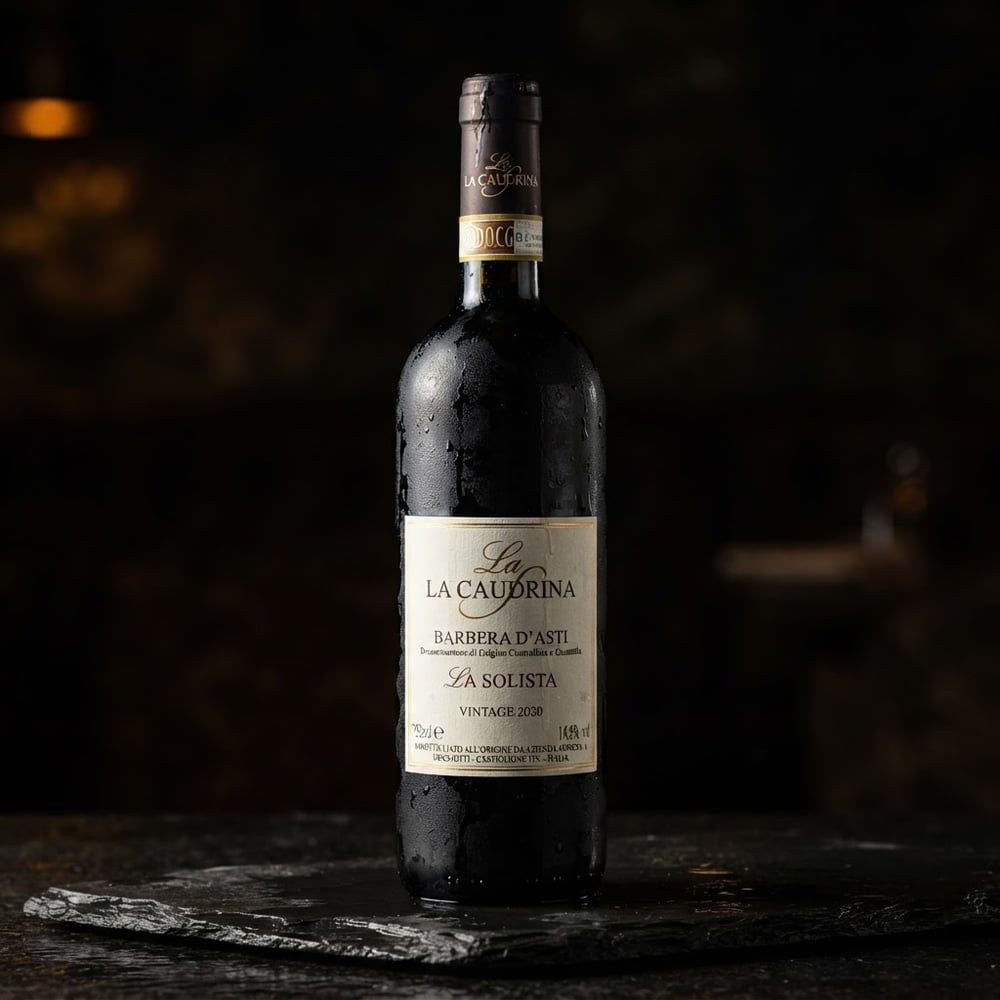
From the Asti hills in Piedmont, where Barbera has grown for centuries and rarely gets the attention it deserves. La Caudrina farms it there and bottles it as La Solista, a single expression of the grape at 14% alcohol.
- Barbera, Piedmont's own red grape.
- Barbera d'Asti DOCG, the hills around Asti.
- 2020 vintage, Piedmont.
- Dry, medium body, medium tannin.
- High acidity, the grape's signature.
How it is made
Barbera d'Asti DOCG is a rule-bound appellation: the wine must be at least 85% Barbera, grown inside the defined zone around the city of Asti, and it must reach a minimum alcohol level before it can carry the name. Barbera itself is a grape that keeps its acid even when it ripens fully, which is why it holds shape where many warm-climate reds go soft.
How it tastes
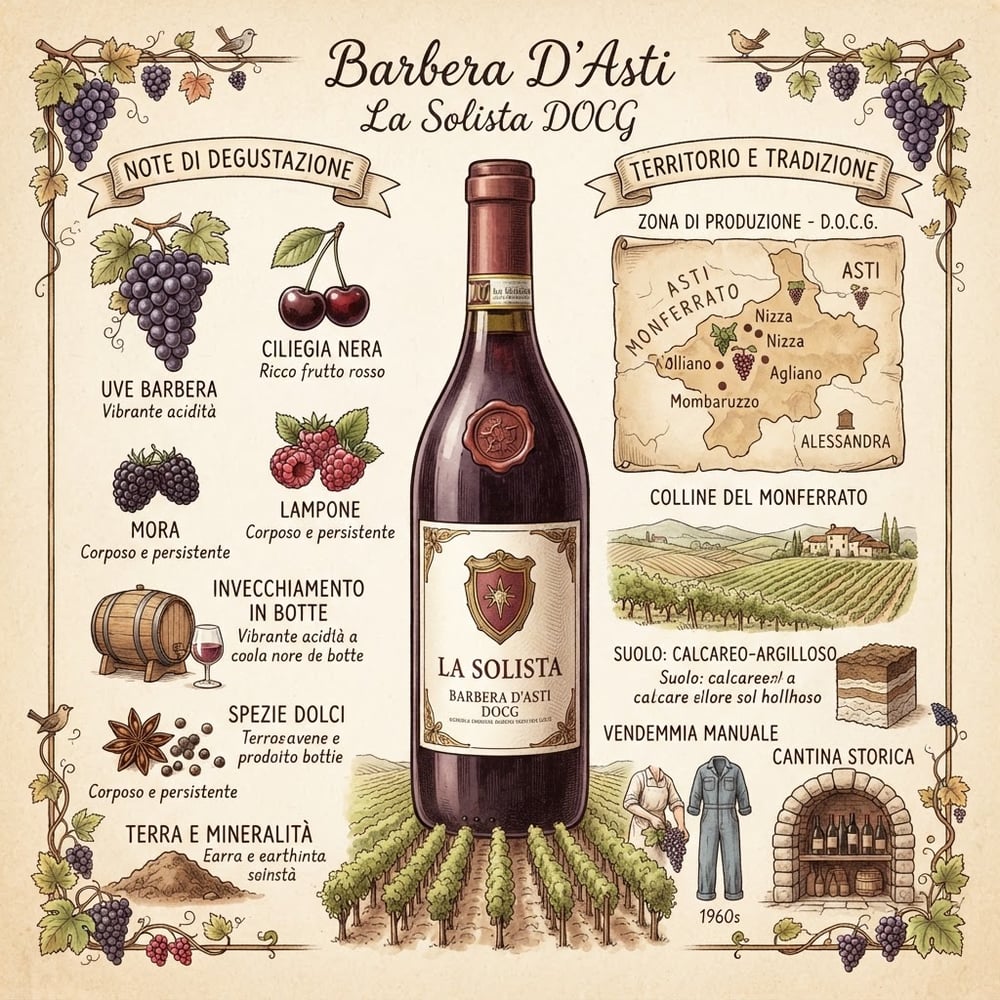
Red cherry and blackberry lead, with violet over the top and an earthy note underneath. The acidity is firm and stays firm, cutting through the fruit rather than sitting behind it. Tannins are medium, so the structure comes from the acid more than the grip.
Where it comes from
The Asti hills sit in southern Piedmont, between the Langhe and Monferrato, a landscape of rolling ridges and old vineyard holdings. Barbera is the most planted red grape in the region, more so than Nebbiolo, and it has been the everyday wine of Piedmontese tables far longer than its more famous neighbour.
Good to know
Barbera was once dismissed as a workhorse grape, the one grown for volume while Nebbiolo took the glory. The DOCG for Barbera d'Asti arrived in 2008, upgrading an older DOC, and it split the zone in two: a wider area and a smaller, tighter one around the town of Nizza. The grape's high acid is not a flaw to be managed. It is what keeps the wine alive in the bottle.