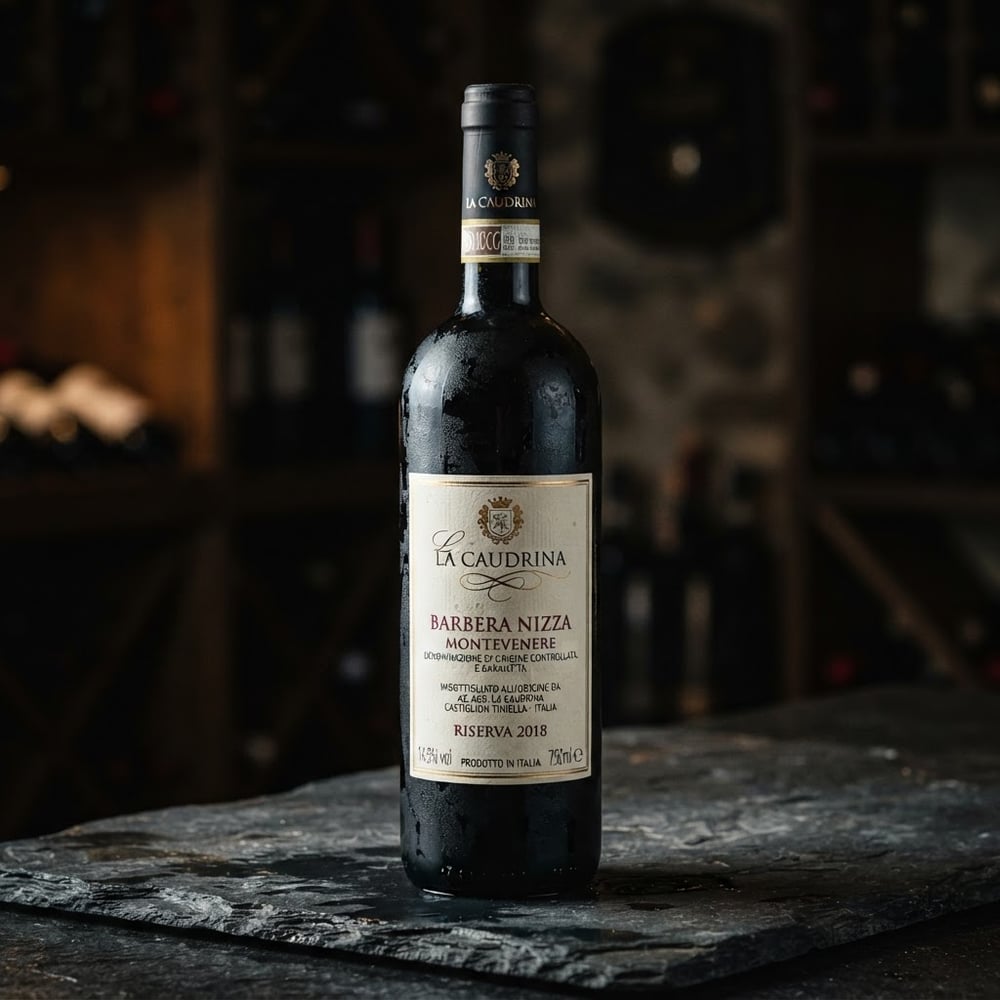
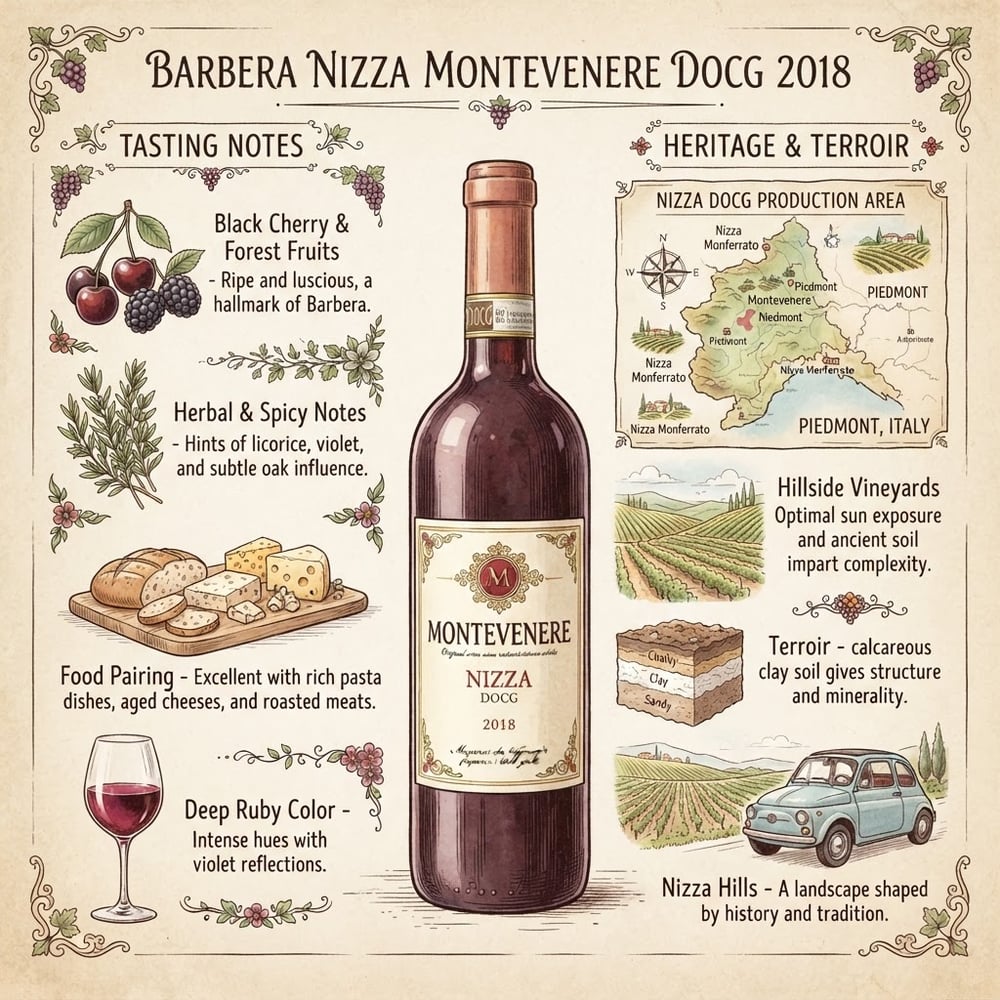
La Caudrina farms in the hills around Nizza Monferrato, the corner of Piedmont that Barbera growers fought hardest to have recognised on its own. In 2014 the zone won its own DOCG, Barbera d'Asti Nizza, and with it a set of rules the rest of Barbera d'Asti does not carry: lower yields, and a mandatory wait before the wine can be sold. Montevenere is the estate's single-site bottling from that zone.
- Barbera, Piedmont's everyday red, here given a serious frame.
- Nizza DOCG, the strictest Barbera zone in Italy.
- 2018 in Piedmont: a long, even growing season.
- 14.5% alcohol, dry, medium body, medium tannin.
- High acidity, the grape's signature.
How it is made
Barbera has almost no tannin of its own compared with Nebbiolo, and very high acid. Nizza's rules answer that directly: yields are capped well below the wider appellation, and the wine must spend a set period in the cellar before release, longer than plain Barbera d'Asti. The result is a Barbera built for time rather than for the jug.
How it tastes
Red cherry and blackberry, with violet over the top and something earthy underneath. The tannins are firm and the acidity is high, so the fruit reads bright rather than sweet. Dry, medium-bodied, and warm at 14.5%.
Where it comes from
Nizza Monferrato sits in the Monferrato hills of Piedmont, southeast of Alba and outside the Langhe. The soils here are a mix of clay, marl and sand, and Barbera has grown on them for centuries, long before anyone thought to give it a DOCG.
Good to know
Barbera was the grape that kept Piedmont drinking while Barolo and Barbaresco were still being sold off young. Nizza became a DOCG in 2014, the first appellation in Italy created specifically for Barbera, and the only one that names a single town.