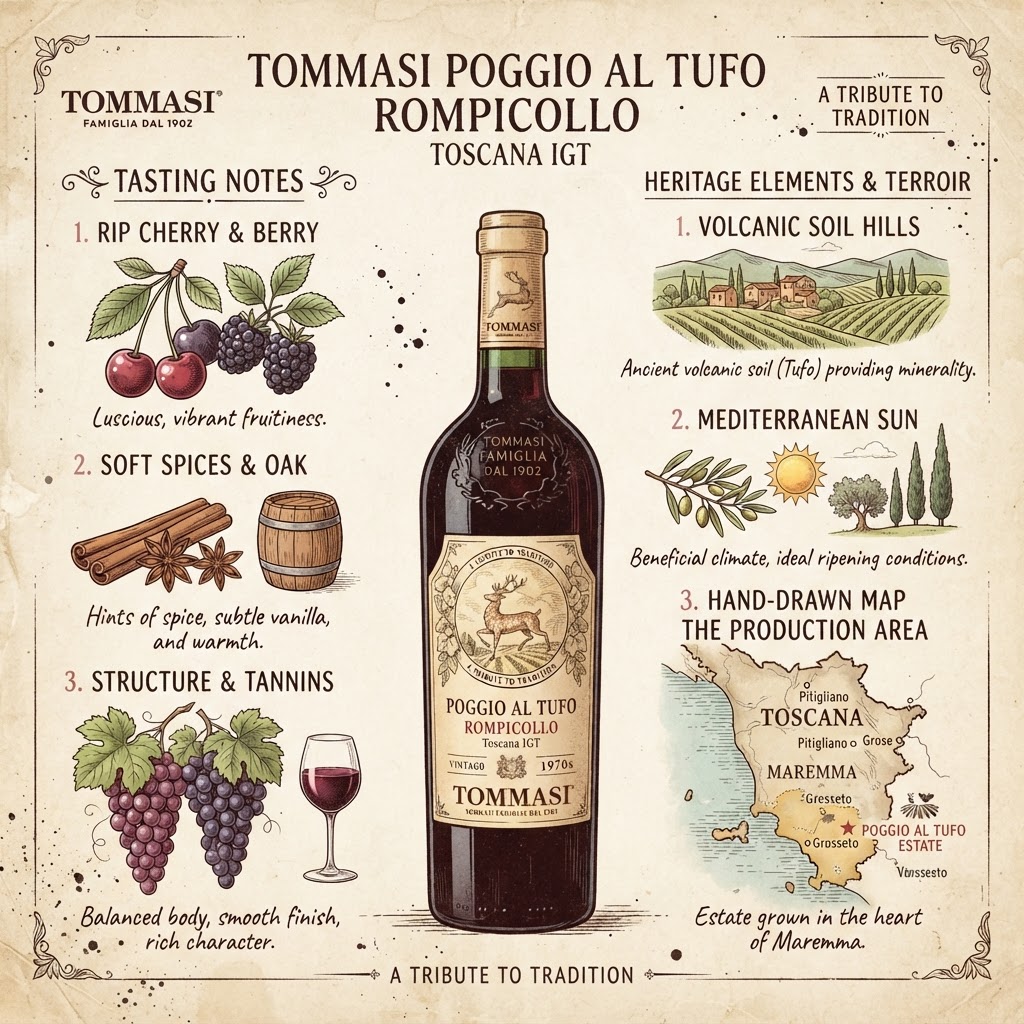
Tommasi farms a single hillside in the Maremma, the coastal strip of Tuscany that gets more sun and less rain than Chianti. Rompicollo is Sangiovese with a pour of Cabernet Sauvignon, and the blend is bottled under Toscana IGT rather than a village name, which is what lets a Tuscan estate put the two together at all.
- Sangiovese and Cabernet Sauvignon, Tuscany.
- Toscana IGT, the region's flexible tier.
- 2018, a ripe and generous Tuscan vintage.
- Full body, high acidity, medium tannin.
- 13.5% alcohol, dry.
How it is made
IGT is the loosest of Italy's three tiers, and it exists precisely for wines like this one. A Tuscan grower who wants Cabernet in the blend steps outside the DOC rules and takes the IGT label instead. In the Maremma the two grapes ripen side by side, Sangiovese keeping its bite, Cabernet filling out the middle.
How it tastes
Red fruit first: cherry, blackberry, wild strawberry, with thyme and rosemary over the top. Then leather and tobacco, which is what Sangiovese does when it has had a few years in bottle. The acidity stays high and the tannins are firm but not aggressive, so the wine reads full rather than heavy.
Where it comes from
The Maremma is Tuscany's south coast, warmer and flatter than the Chianti hills, with soils that run from clay to volcanic tufo. Poggio al Tufo takes its name from that tufo, the soft volcanic rock under the vines. Cabernet has been planted here since the 1970s, when growers worked out the coast could ripen it.
Good to know
Sangiovese is the grape behind Chianti and Brunello di Montalcino, and it is notoriously sensitive to where it grows, changing shape from hill to hill. The old Tuscan word for it, sangiovese, means "blood of Jove".