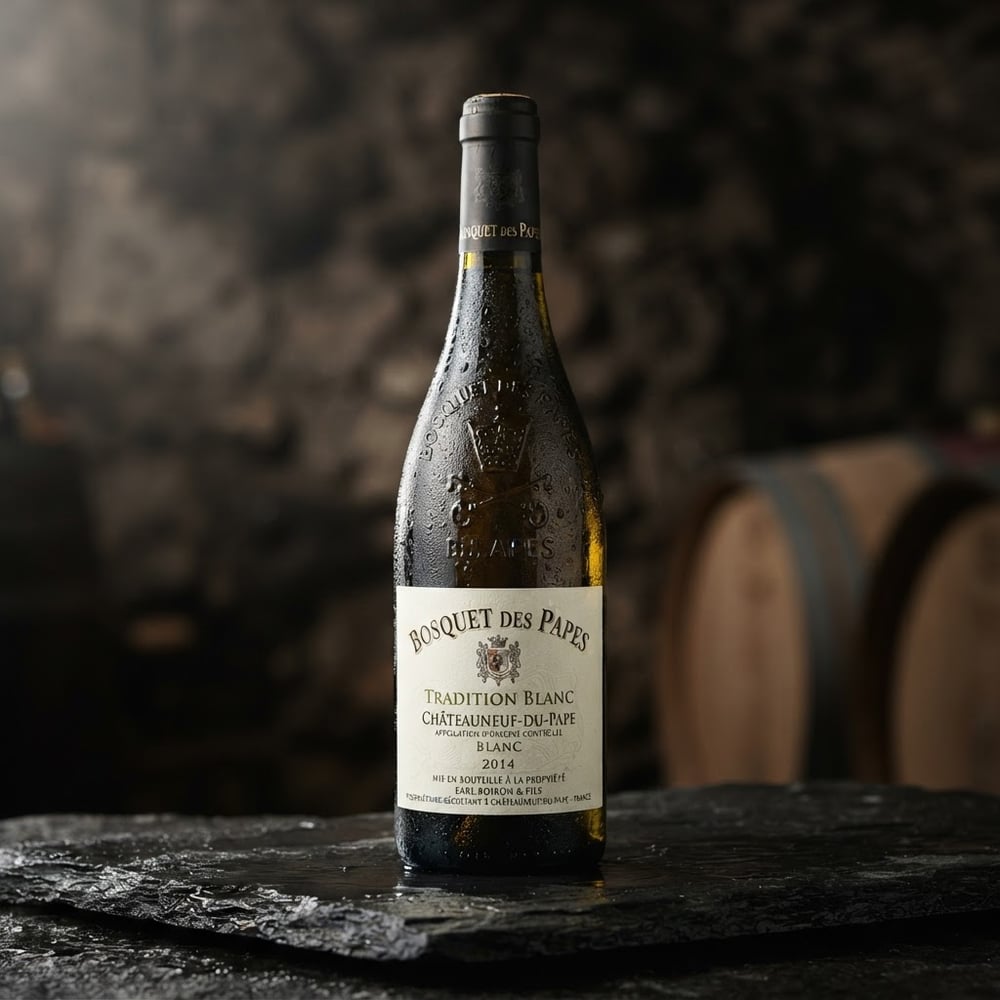
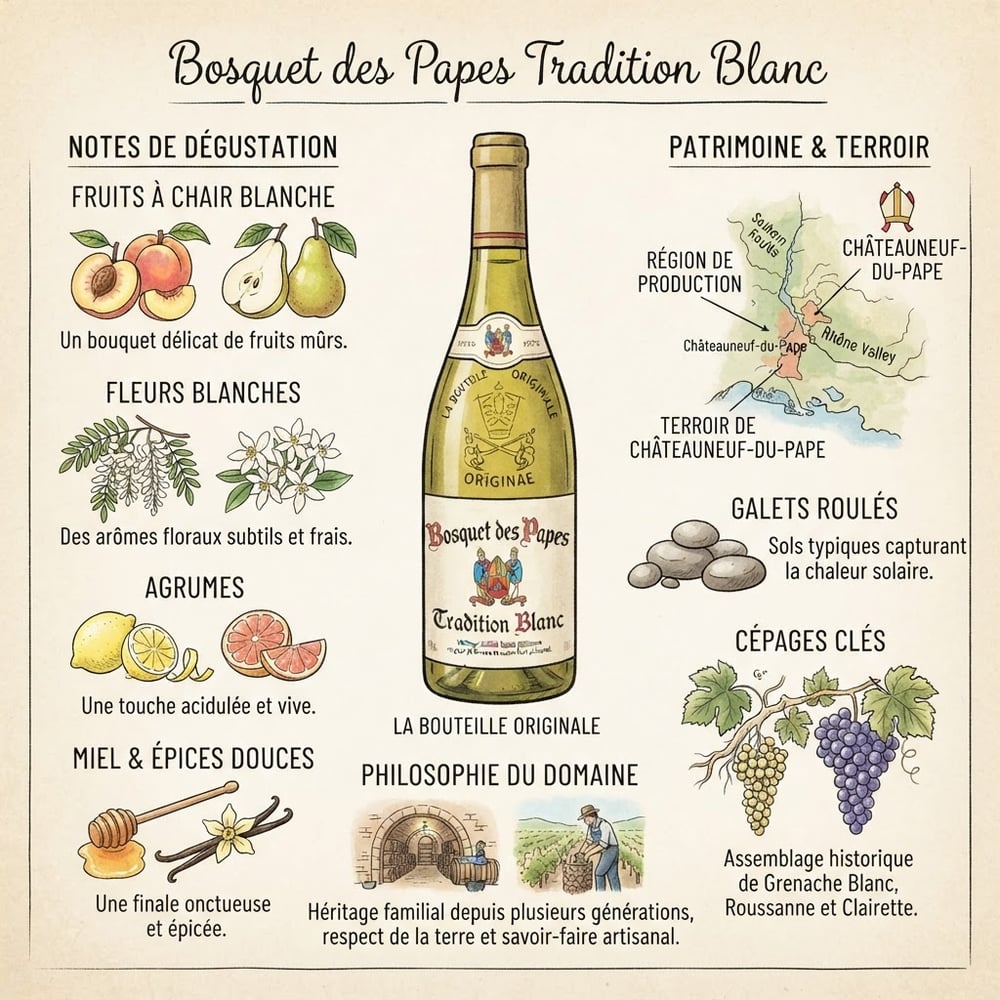
Châteauneuf-du-Pape is famous for reds, and the appellation allows thirteen grape varieties to be planted side by side. Bosquet des Papes farms in the north of the appellation and bottles a white from four of them, a rarity in a region that plants mostly red.
- Grenache Blanc, Roussanne, Clairette, Bourboulenc, four of the thirteen permitted varieties.
- Châteauneuf-du-Pape, Southern Rhône, France.
- 2014, a cooler, later vintage in the Southern Rhône.
- Full bodied, dry, low tannin, medium acidity.
How it is made
The appellation's rules were written with red wine in mind, but they permit whites too, from the same thirteen varieties grown on the same galets roulés, the large rounded stones that cover much of the vineyard. Whites account for only a small share of what Châteauneuf-du-Pape produces, so a bottle like this is the exception rather than the rule.
How it tastes
White peach and honeysuckle lead, with citrus zest and a clear note of wet stone underneath. There is almond and a soft, rounded weight from the Roussanne and Grenache Blanc. Medium acidity keeps it from turning heavy, and the finish stays clean and dry.
Good to know
Châteauneuf-du-Pape was one of the first French appellations to set down formal rules, drawn up in the 1920s and 1930s by a local syndicate of growers. Among the conditions was a ban on planting on certain soils, and a requirement that grapes be picked ripe, which is why the wines of the appellation tend to carry more weight than their northern Rhône neighbours.