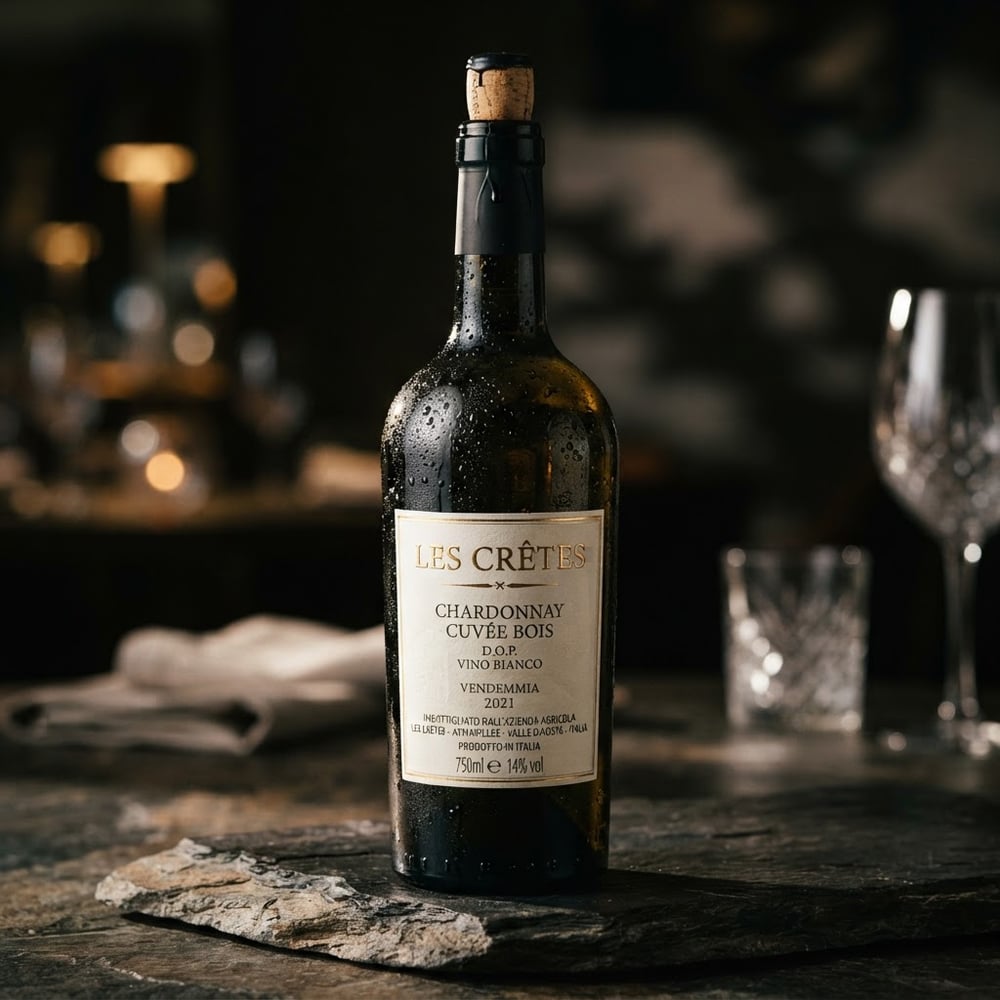
Les Crêtes farms some of the highest vineyards in Italy, on terraces cut into the Valle d'Aosta where the Alps close in on both sides. This is Chardonnay from that valley, aged in wood, and it carries the weight and the coolness of the place at once.
- Chardonnay, the only grape in the bottle.
- Valle d'Aosta D.O.P, Italy's smallest wine region.
- 2021 vintage, 14% alcohol.
- Dry, full-bodied, high acidity.
- 750ml.
How it is made
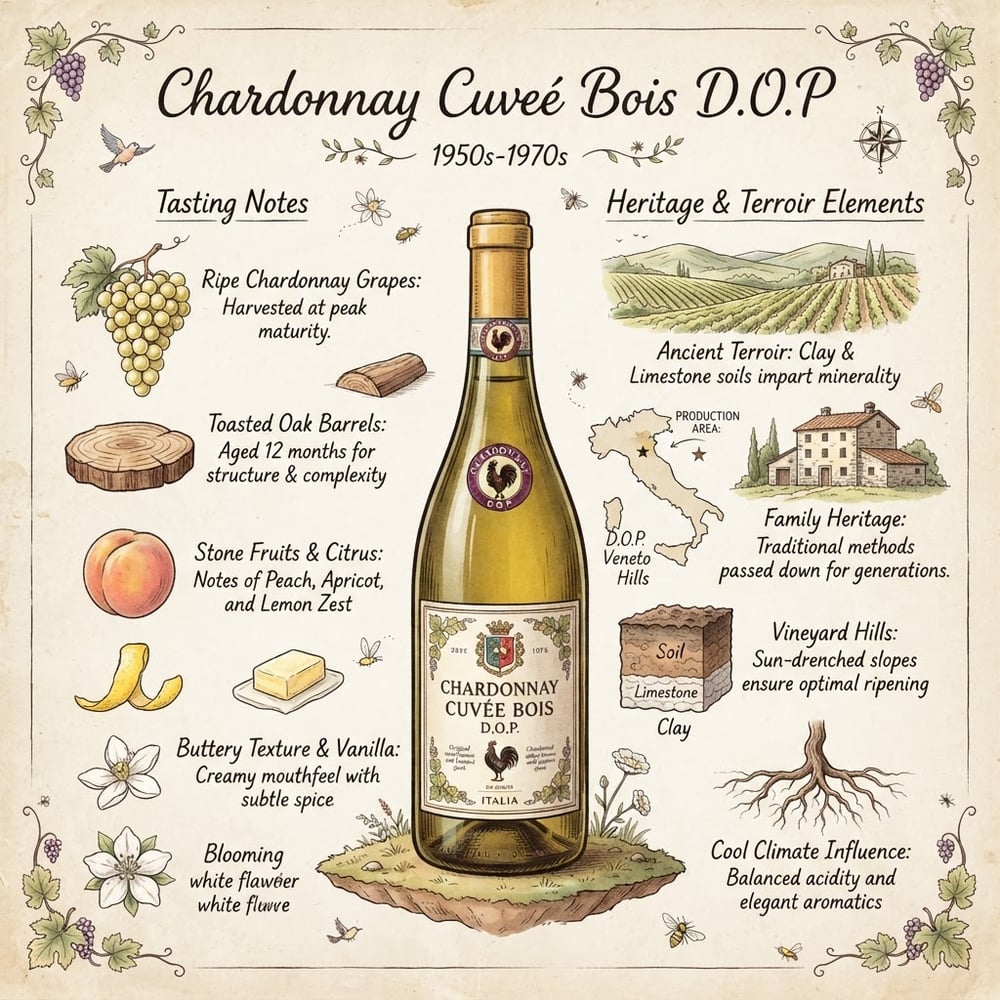
The name Bois refers to the wood, and the wine spends time in barrel, which is where the toasted oak and the butter in the profile come from. The Valle d'Aosta D.O.P is a small appellation in the far northwest, tucked against France and Switzerland, where vineyards sit at altitudes that would be unthinkable further south. Chardonnay is not native here, but it was planted widely after the phylloxera years and it holds the mountain acidity well.
How it tastes
Green apple and lemon curd lead, then the oak arrives as toast and butter rather than vanilla sweetness. The acidity stays high and keeps the whole thing taut, and there is a mineral streak underneath that reads more stone than fruit. The texture is full and the finish is long, with the pulp of the fruit persisting after the wood has faded.
Where it comes from
The Valle d'Aosta runs east from Mont Blanc toward the Po plain, and only a thin strip of land along the river is flat enough to farm. Everything else is terraced, steep, and worked by hand because no machine can climb it. The region grows a fraction of what Piedmont or Tuscany does, which is why the wines rarely travel far from the valley.
Good to know
Valle d'Aosta has around one percent of Italy's vineyard area, and its D.O.P rules cover a handful of villages and styles rather than one broad zone. Les Crêtes is one of the estates that kept the valley's vineyards in production when many were being abandoned.