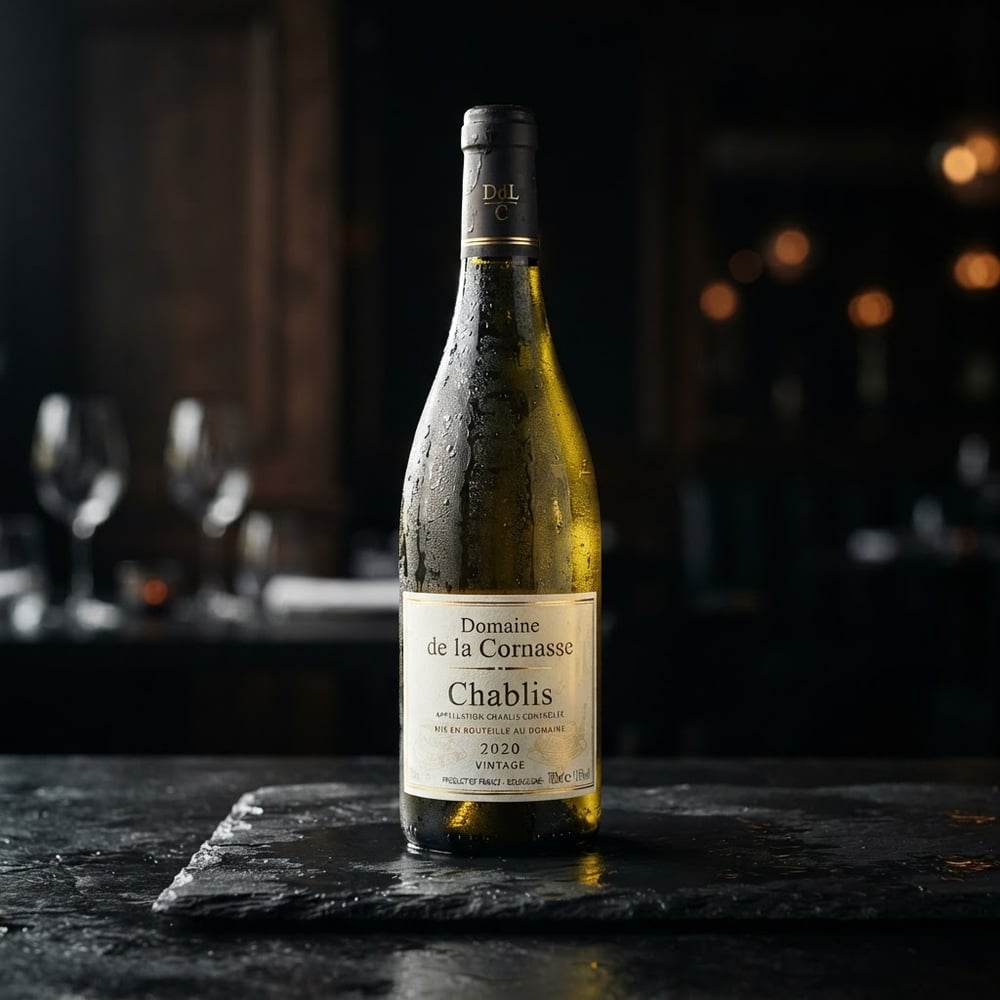
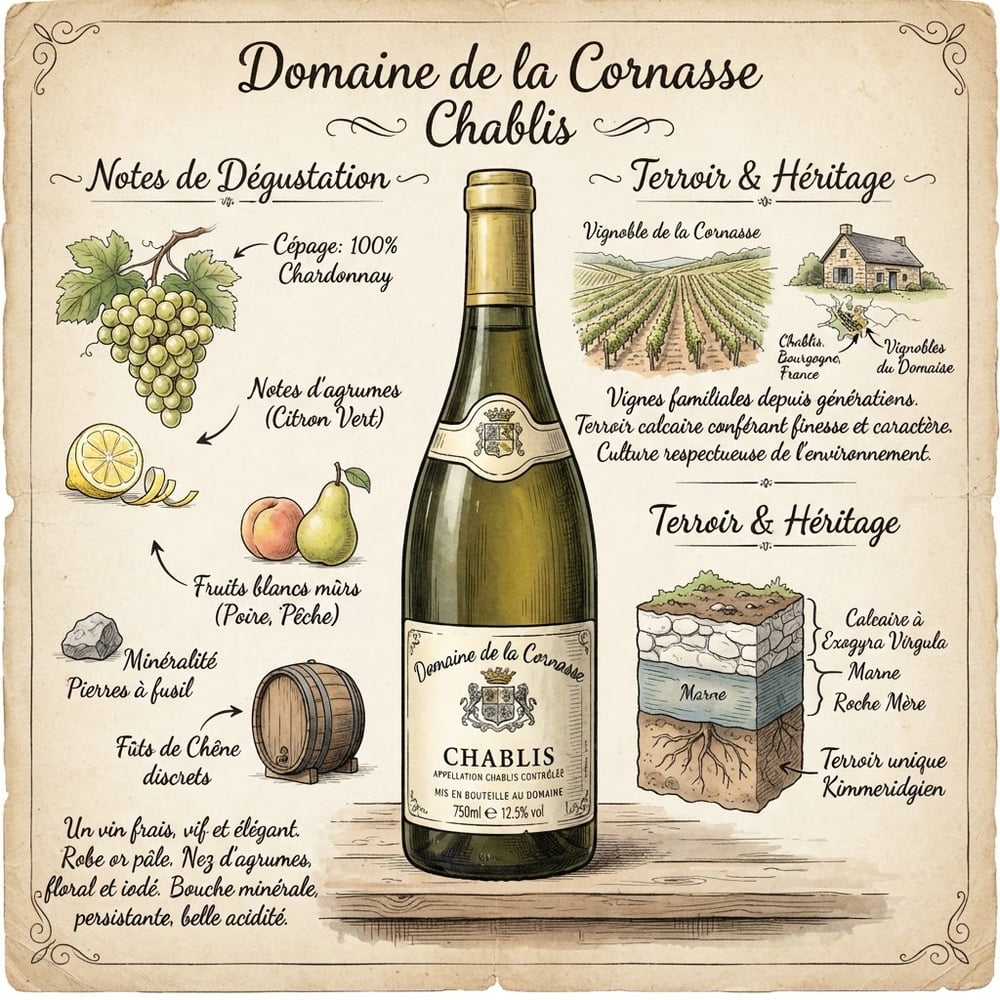
From a small estate in the northernmost reaches of Burgundy, this is Chablis in its purest form: Chardonnay grown on the fossil-rich Kimmeridgian clay and limestone that runs beneath the vineyards. The 2020 vintage was warm and generous, and the wine carries both that ripeness and the taut, saline spine the appellation is known for.
- Chardonnay, the only grape permitted in Chablis.
- Chablis, the northernmost appellation of Burgundy.
- 2020, a warm and generous vintage.
- 12.5% ABV, dry, light-bodied.
- High acidity, low tannin.
How it is made
Chablis sits on Kimmeridgian marl, a soil of clay and fossilised oyster shells laid down in the Jurassic period. That shell content is what gives the wines their unmistakable flint and saline character. Unlike the rest of Burgundy, the appellation permits almost no new oak, so the fruit and the soil are left to speak for themselves.
How it tastes
Green apple and lemon on the nose, with a mineral, flinty edge that runs through the palate. Ample and lively, with a saline finish that lingers. The high acidity keeps everything bright and focused from first sip to last.
Good to know
Chablis is one of the few great white wine appellations in the world defined almost entirely by its soil. The Kimmeridgian band that runs through the region also surfaces in Champagne and in parts of England, but nowhere else does it produce Chardonnay quite like this.