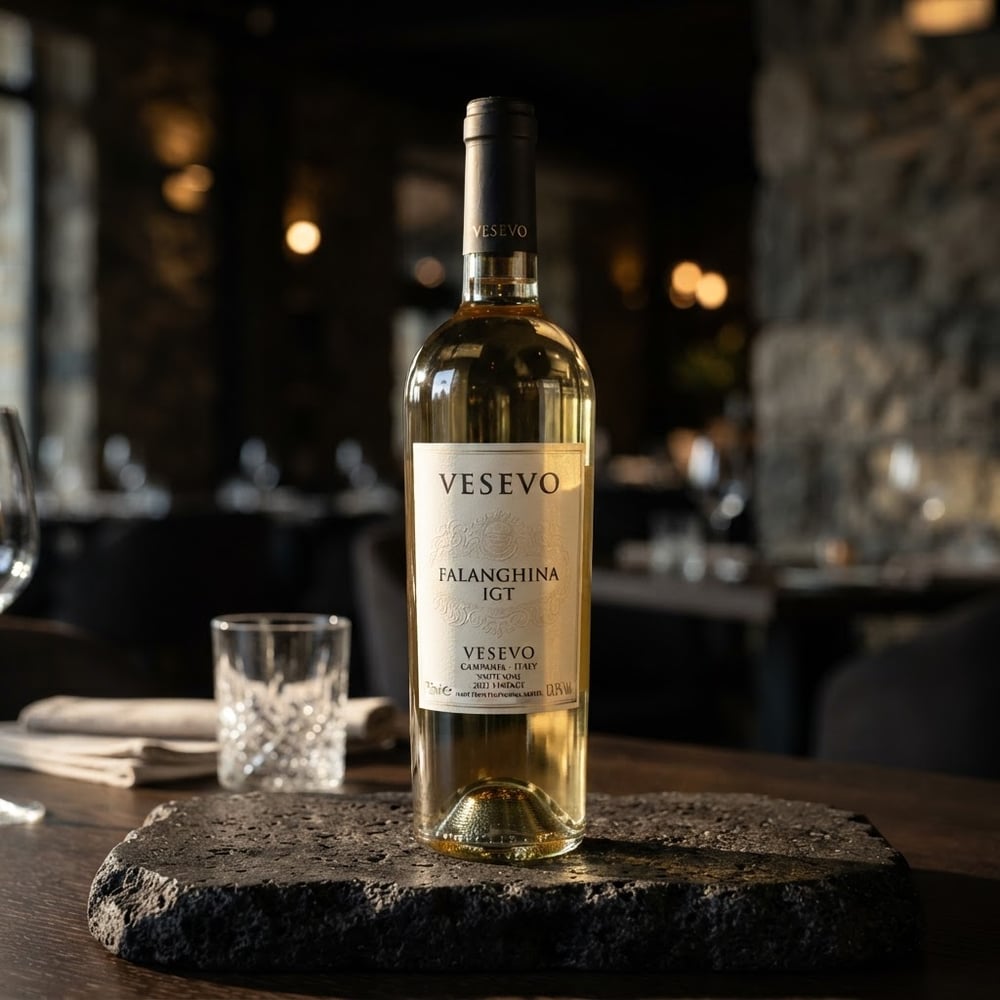
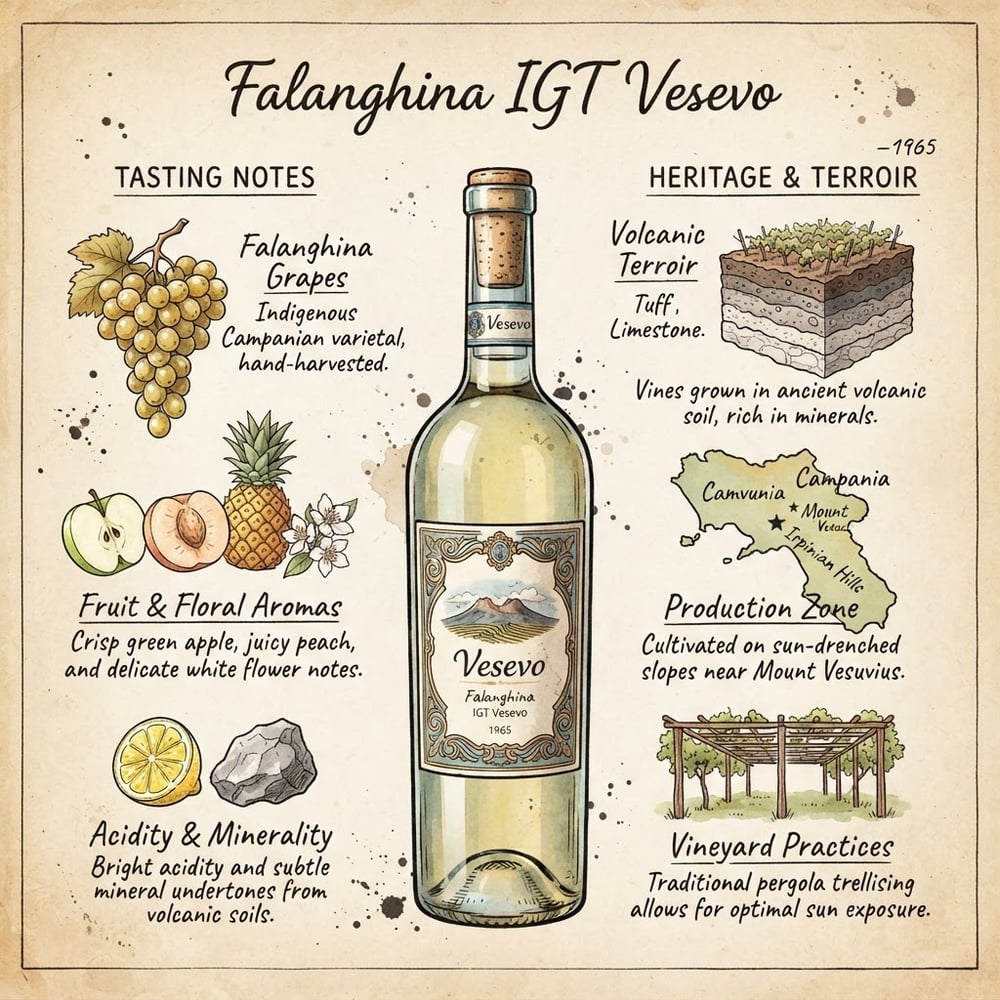
Vesevo takes its name from Mount Vesuvius, and the Falanghina in the bottle comes from the volcanic ground that surrounds it. The grape is one of Campania's oldest white varieties, grown across the hills north of Naples and along the Irpinian slopes, and it keeps a grip of acidity that most southern whites lose. Here it is bottled under the Falanghina IGT rather than a village-level appellation, which lets the fruit do the talking.
- Falanghina, an ancient Campanian white grape.
- Falanghina IGT, Campania, southern Italy.
- 2023, a dry white at 13% abv.
- Medium body, high acidity, low tannin.
- 750ml bottle.
How it is made
Falanghina is picked early enough to hold its acid, then fermented cool in stainless steel to keep the aromatics intact. The style is deliberately reductive and unoaked, so nothing sits between the grape and the glass. IGT rather than DOCG gives the winery room to blend across zones if it wants to.
How it tastes
White peach and citrus come first, then a firm almond note on the back of the palate. The minerality reads almost saline, which is the volcanic soil showing through. Acidity stays high from start to finish, and the body sits at medium, so it carries weight without feeling soft.
Where it comes from
Campania is the region around Naples, and Falanghina has been grown there since Roman times, though it nearly disappeared in the twentieth century before growers in the Irpinia hills brought it back. The vineyards sit on volcanic and limestone ground, which is where the smoky, saline edge in the grape comes from.
Good to know
Falanghina is often described as the white grape that drinks like a red, because of its acidity and structure. The name itself is thought to come from the Latin falangae, the wooden stakes used to train the vines.