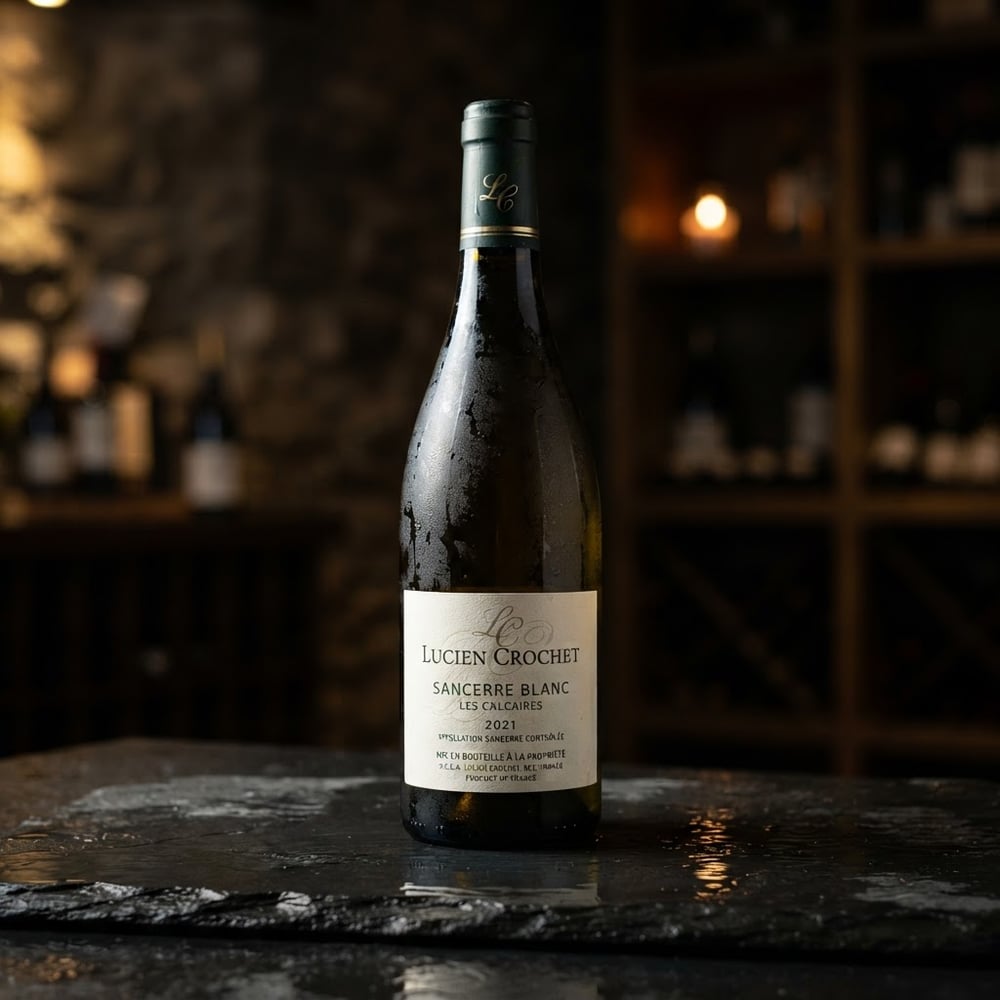
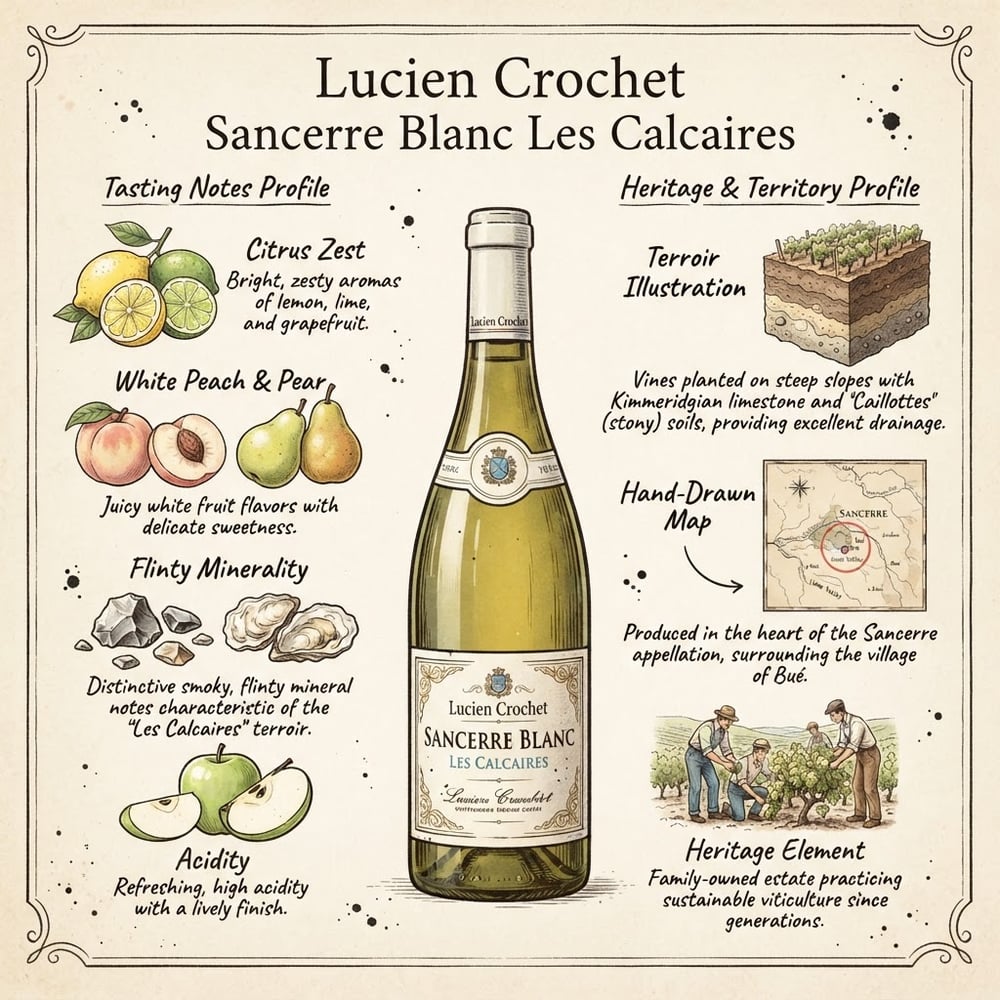
Lucien Crochet farms a set of parcels around Bué, at the eastern edge of the Sancerre appellation, where the slopes are built on limestone rather than the flint and clay of the better-known villages. Les Calcaires is the bottling that comes from those limestone plots, and the name is a straight description of the soil under the vines.
- Sauvignon Blanc, the only white grape of Sancerre.
- Sancerre, in the eastern Loire, on limestone and flint hills.
- 2021, a cool vintage in the Loire.
- 13% ABV, dry, light-bodied.
- High acidity, low tannin, no oak weight.
How it is made
Sancerre blanc is a varietal wine by law: Sauvignon Blanc and nothing else. The appellation covers a small patch of the Loire's left bank, and the soil shifts village to village between limestone, clay and silex. White Sancerre is typically fermented cool and raised in stainless steel or old large wood, so the fruit and the soil stay in front and the oak stays behind.
How it tastes
Citrus and green apple at the front, then flint and wet stone through the middle. The texture is rounder than the nose suggests, generous and juicy, with the acidity cutting back through the finish. Light in body, dry throughout, and the mineral note is what stays after the fruit has gone.
Where it comes from
Sancerre sits at the far eastern end of the Loire, closer to the middle of France than to the Atlantic. Bué, where the Crochet parcels lie, is one of the appellation's easternmost villages, and its limestone gives a firmer, more chiselled style of Sauvignon Blanc than the flint-heavy sites to the west.
Good to know
Sancerre is one of the few French appellations that makes both a famous white and a serious red from the same village. The reds come from Pinot Noir, and they are a small share of the total. Most of the vineyard is planted to Sauvignon Blanc, and has been since the phylloxera replanting in the late 1800s.