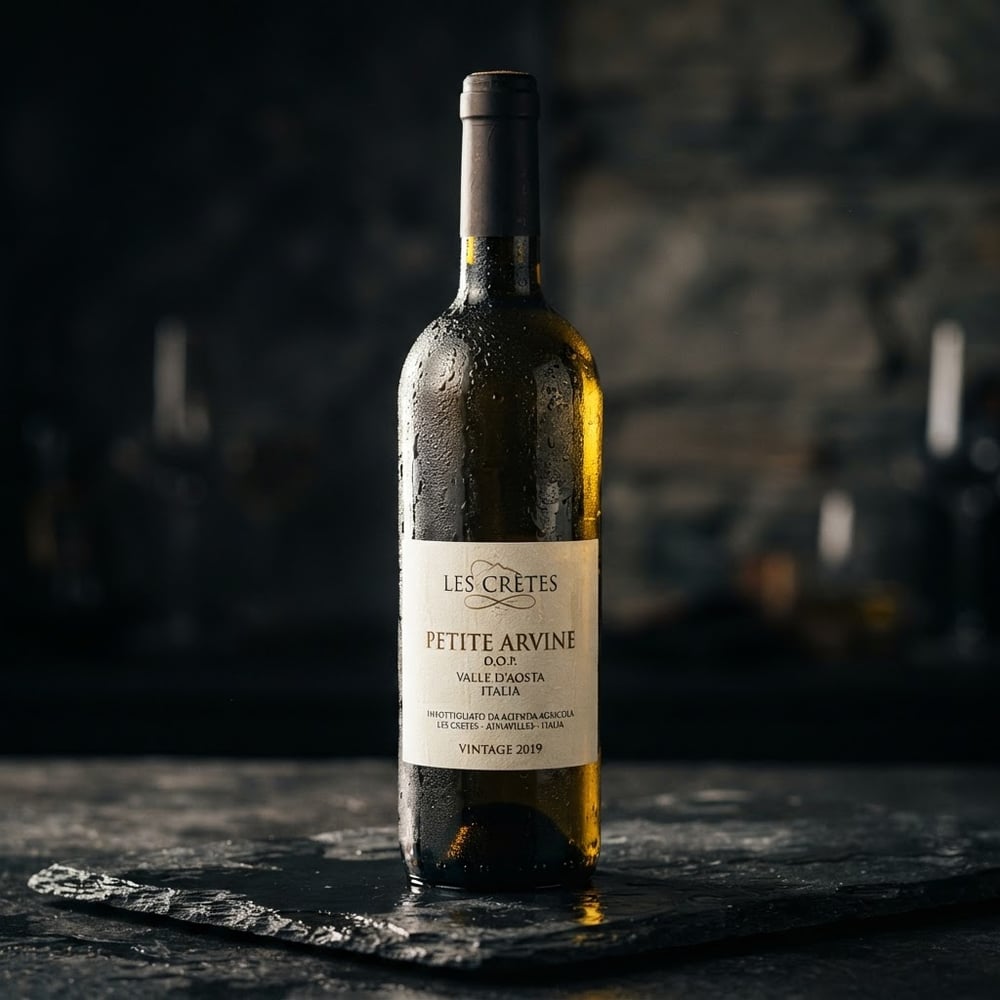
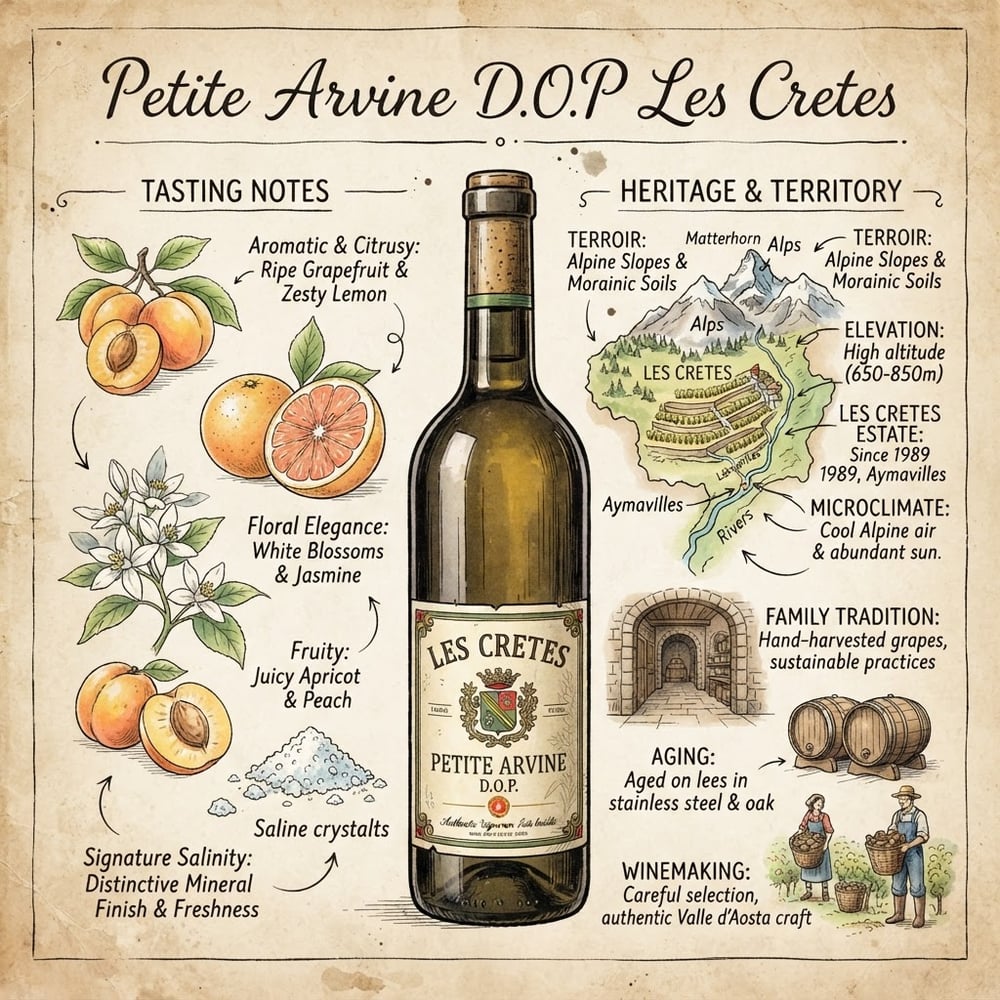
Petite Arvine is a grape that survives almost nowhere else. It is grown in the Valle d'Aosta, the smallest wine region in Italy, where vineyards sit on steep terraces cut into the Alps and the growing season is short and cool. Les Crêtes works those terraces, and this is the variety the valley is known for.
- Petite Arvine, a rare Alpine white grape.
- Valle d'Aosta D.O.P, Italy's smallest wine region.
- 2019 vintage, a warm year in the Alps.
- 15% ABV, high acidity, dry, medium body.
How it is made
Petite Arvine is a late-ripening grape, which is why it holds its acidity so well in a mountain climate. In the Valle d'Aosta the vineyards are worked by hand on terraces, because the slopes are too steep and too narrow for machinery. The variety is grown on both sides of the valley, and it keeps a saline edge that comes from the soils and the altitude rather than from the winery.
How it tastes
Brilliant straw yellow in the glass. The nose is delicate, acacia flower and a hint of citrus, with something exotic underneath. On the palate it is dry and medium in body, with grapefruit, alpine herbs and wet stone. The acidity is high and crisp, and the finish is saline and piercing. Low tannin, as a white should be, and a long mineral close.
Good to know
Petite Arvine was nearly lost. It was saved from disappearing in the twentieth century, and today the Valle d'Aosta is the only place in the world where it is grown in any real quantity. The name comes from the Latin arvina, meaning grape. It is also one of the few white grapes that can carry 15% alcohol without tasting heavy, because the acidity holds the wine in shape.