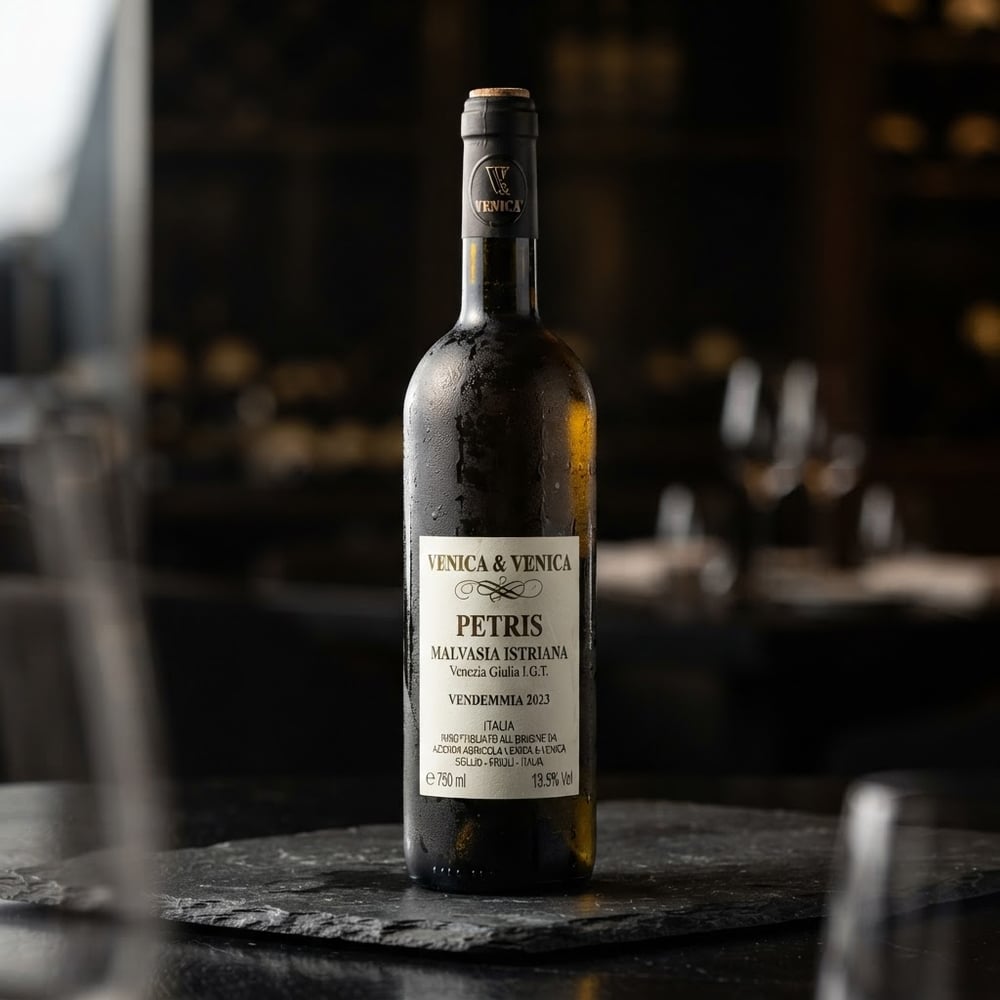
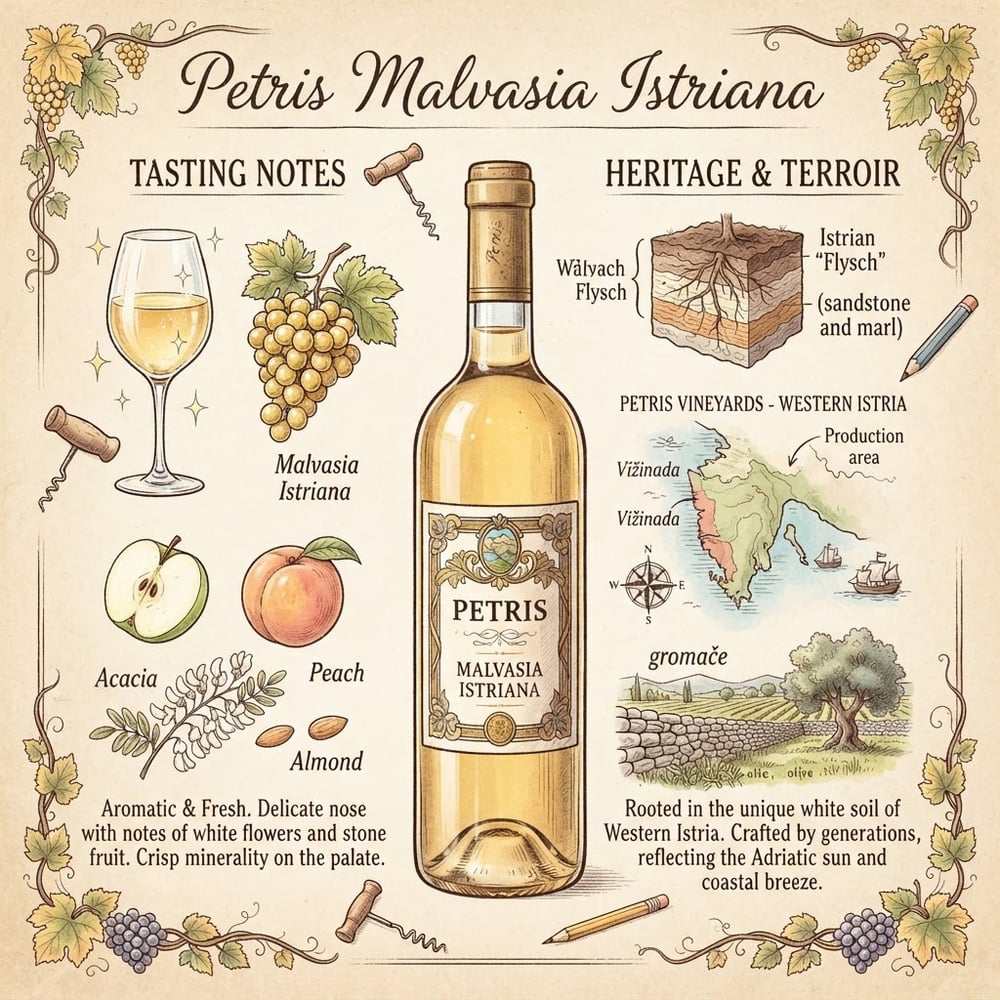
Venica & Venica farms a handful of hillside plots in Friuli Venezia Giulia, the northeastern corner of Italy pressed up against Slovenia, and this is Malvasia Istriana from the Friuli Isonzo appellation. The grape is Istrian by origin, at home on both sides of that border, and it keeps its aromatic lift even when it ripens to 14% alcohol.
- Malvasia Istriana, the Istrian branch of the family.
- Friuli Isonzo, on the flatlands east of Gradisca.
- 2023, a warm vintage in Friuli.
- Dry, medium-bodied, high in acidity.
- Fermented dry, low in tannin.
How it is made
Friuli Isonzo is a DOC on the gravelly, alluvial plain where the Isonzo river meets the sea, a zone built on white wine. Malvasia Istriana is picked ripe and fermented dry, and the variety carries a thick skin that holds on to aroma. The 14% alcohol is high for a white, which comes from ripe fruit rather than from anything added.
How it tastes
White peach and lemon zest first, then almond and a saline streak that runs underneath. The acidity is high and keeps the wine tight, the body medium, and the finish long and mineral. There is a faint bitterness on the back of the palate, the almond note again, which is typical of the grape rather than a fault.
Where it comes from
Friuli Venezia Giulia borders Austria and Slovenia, and its winemaking looks both ways: Germanic precision in the cellar, Adriatic varieties in the ground. Malvasia Istriana is grown around Trieste and across the border in Istria, where it is often the local white. The Isonzo zone itself is flat and stone-strewn, cooler than its latitude suggests because cold air comes down off the Julian Alps.
Good to know
Malvasia is not one grape but a family of them, spread from Madeira to the Aegean, and most have nothing to do with each other beyond the name. Malvasia Istriana is the Adriatic member, and in Friuli it is usually the only one on the label.