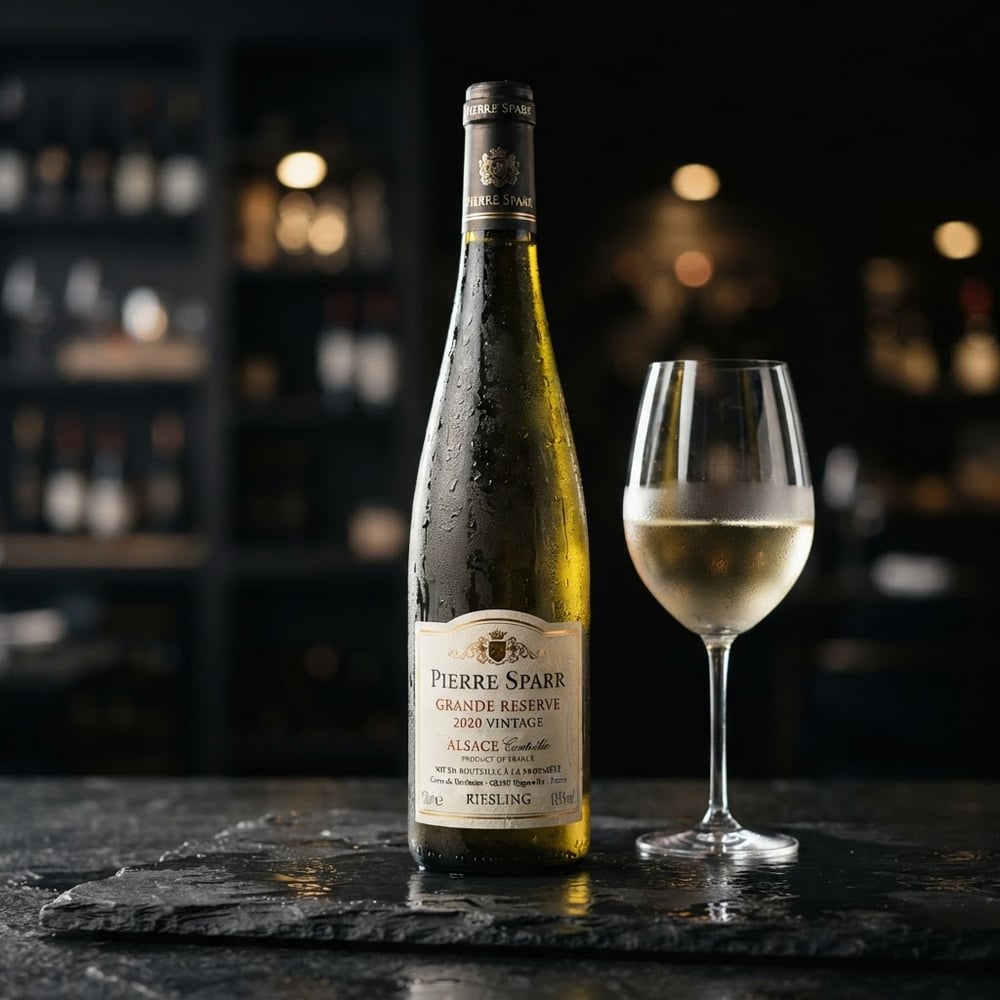
Alsace makes Riesling unlike anywhere else in France, and Pierre Sparr has been working the slopes of the Haut-Rhin for a long time. The Grande Reserve is the estate's step up: fruit from older vines, picked later, fermented dry. 2020 was a warm, generous vintage in Alsace, and it shows in the weight of the fruit.
- Riesling, 100%, the grape Alsace is built on.
- Alsace AOC, northeastern France, along the Rhine.
- 2020, a warm vintage with ripe fruit.
- Dry, 12.5% ABV, high acidity, medium body.
- 750ml.
How it is made
Alsace is the only French appellation where wines are labelled by grape rather than by place, a rule that goes back to the region's history as a crossroads between France and Germany. Riesling here is fermented to dryness, unlike its German cousins, and the Grande Reserve comes from a selection of riper parcels.
How it tastes
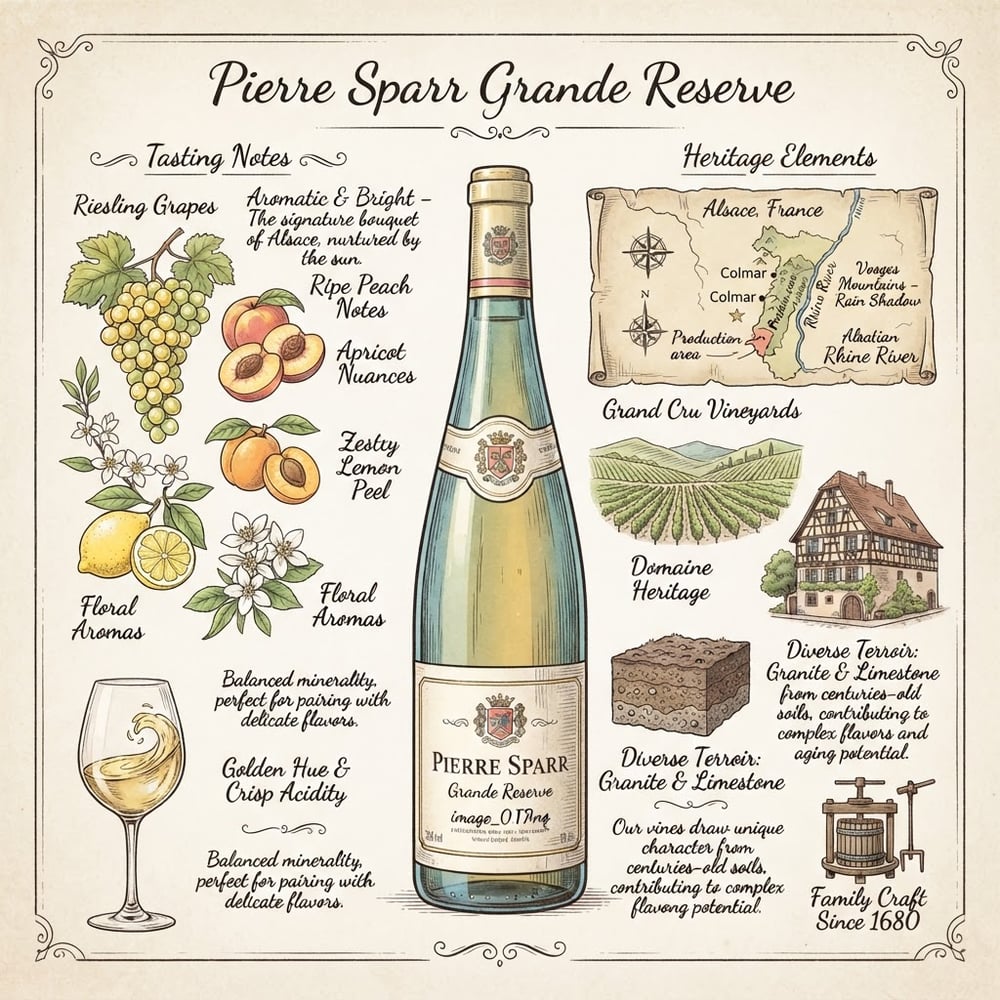
Green apple and lemon zest up front, then white peach and a wet stone minerality that runs underneath. The acidity is high and crisp, cutting through the fruit and leaving a clean, dry finish. Low tannin, medium body, no sweetness.
Where it comes from
The vineyards sit on the eastern slopes of the Vosges, sheltered from Atlantic rain by the mountains. That dry, sunny microclimate is why Alsace can ripen Riesling to full dryness while keeping the acid line intact. The soils are a mix of granite, limestone and sandstone, and the minerality in the glass is the vineyard talking.
Good to know
Alsace Riesling was granted its own AOC in 1962, and the region's grand cru sites were classified in 1975 and 1983. The grape is one of the few white varieties that can age for decades on acidity alone.