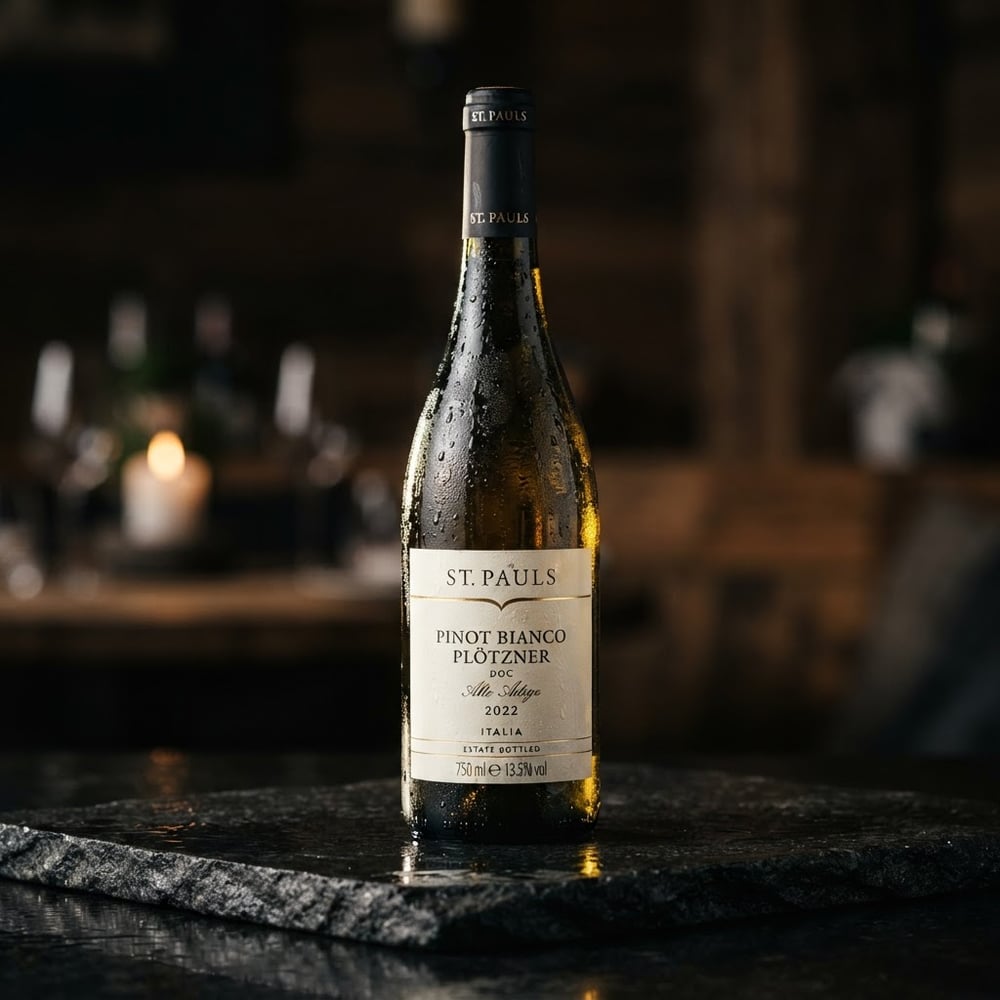
St. Pauls is a co-operative in the Alto Adige, the German-speaking north of Italy where the Dolomites drop into the Adige valley. Plötzner is the vineyard name, and Pinot Bianco is what the village grows best: a grape that in Burgundy is a footnote and here is the whole point.
- Pinot Bianco, known as Weissburgunder in these parts.
- Alto Adige DOC, Italy's northernmost wine region.
- 2022, a warm year that kept the acidity intact.
- 13.5% abv, dry, medium-bodied, low tannin.
How it is made
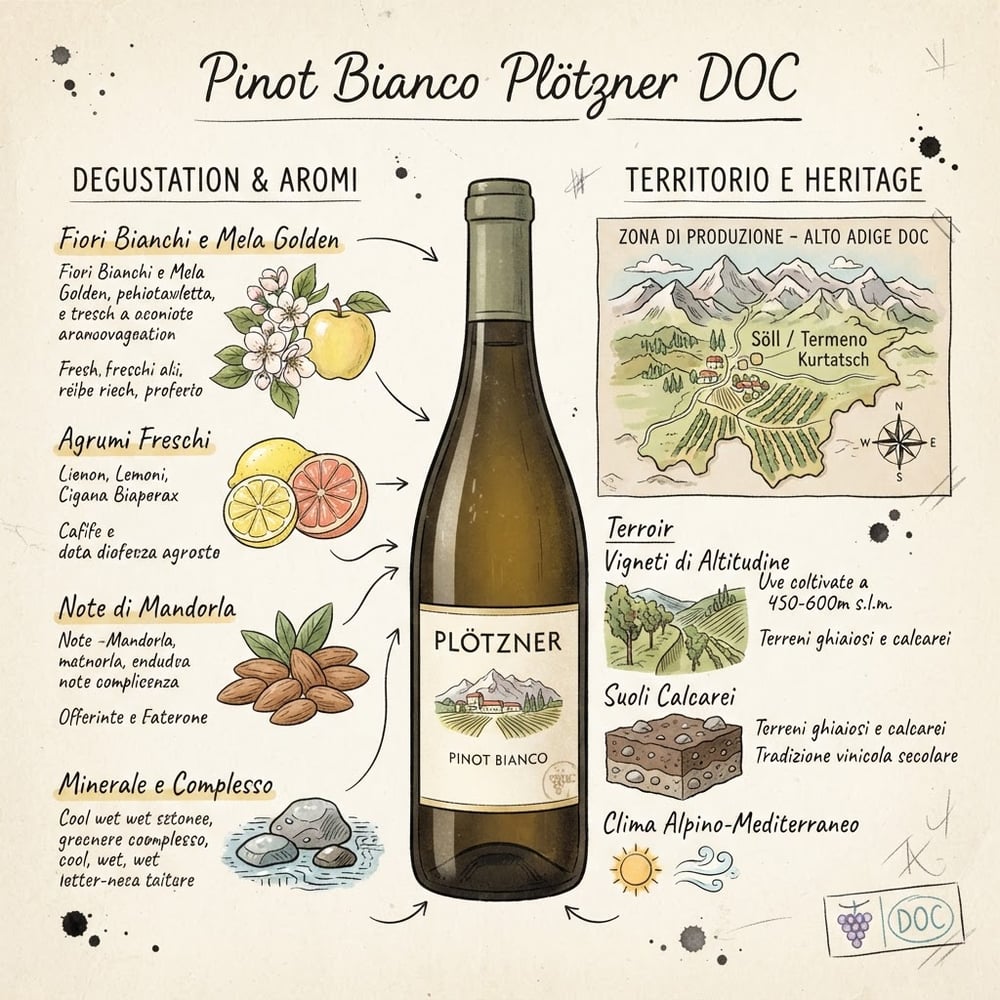
Alto Adige DOC covers a narrow band of vineyards between roughly 200 and 1,000 metres, where the Alps meet the Mediterranean. Pinot Bianco ripens slowly in that range, holding its acid while it builds aroma. The Plötzner site sits among the warmer slopes around St. Pauls, which is why the wine carries both weight and cut.
How it tastes
Green apple and white peach first, then acacia blossom, then a flinty note that comes off the mountain soils. The acidity is high and stays high through the finish, which keeps the fruit from turning soft. Medium body, dry, no oak to get in the way.
Good to know
Alto Adige grows more Pinot Bianco than anywhere else in Italy, and the variety has been planted here since the nineteenth century. The co-operative model is common in the region: small growers, often with a hectare or two, pooling fruit under one cellar. St. Pauls is one of them.