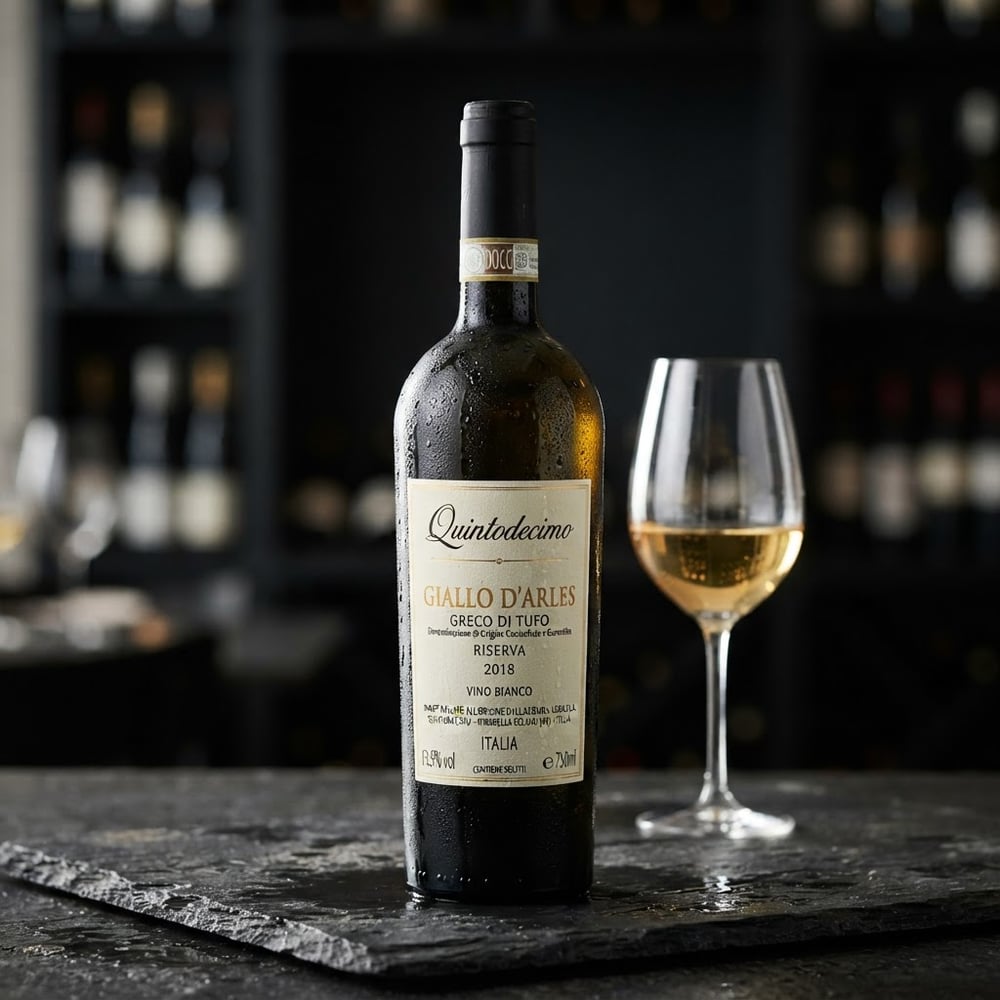
Luigi Moio planted this vineyard above the village of Tufo, in the Irpinian hills east of Naples, where the soil is volcanic tufo and the vines have to work for their water. He farms Greco in the old way, low yields, and the wine that comes off it is one of the few bottles in Campania that has made the wider world pay attention to Greco di Tufo.
- Greco, the grape of Greco di Tufo DOCG.
- Campania, Irpinian hills east of Naples.
- Volcanic tufo soils, high altitude.
- 2018, a warm and steady vintage in the south.
- 13.5% ABV, dry, medium-bodied.
How it is made
Greco di Tufo is one of Italy's small, tightly drawn appellations. Only Greco can go in, only from a handful of villages, and the wine has to be white and dry. The grape is thick-skinned and slow to ripen, and it holds its acidity even in a hot year, which is why the best versions keep a firm spine instead of going soft.
How it tastes
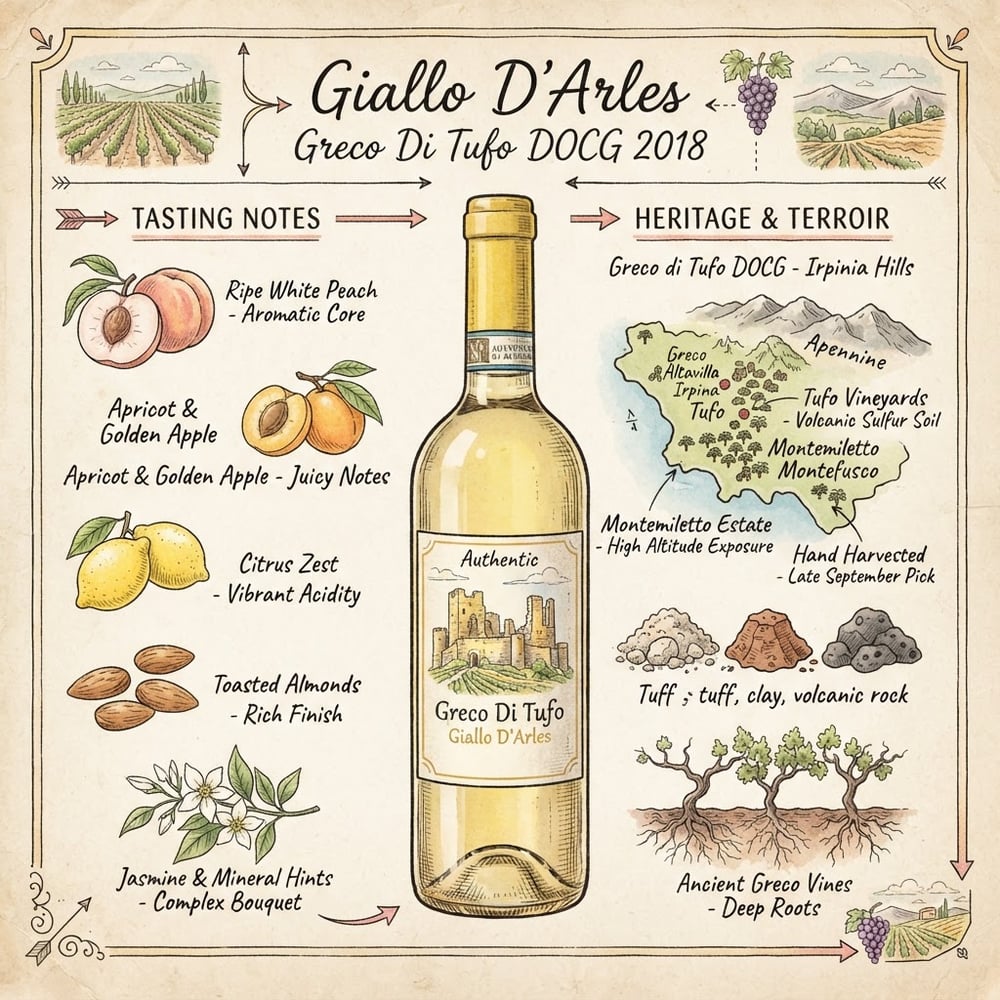
White peach and citrus up front, then almond and something stony and saline underneath. Acidity is high and the tannin is low, so the shape is lean and long rather than broad. The finish is the part that stays with you: wet stone, a lick of salt, and a faint bitterness that is typical of the grape.
Where it comes from
Tufo sits in the province of Avellino, where the hills are made of compacted volcanic ash from eruptions that happened tens of thousands of years ago. That rock drains fast and forces roots deep. Greco has been grown here since the Greeks brought it south, and the name still carries that lineage.
Good to know
Greco di Tufo was one of the first white wines in southern Italy to be granted DOCG status, in 2003. The grape is unrelated to the Greco Bianco of Calabria, despite the shared name. The two are different varieties entirely.