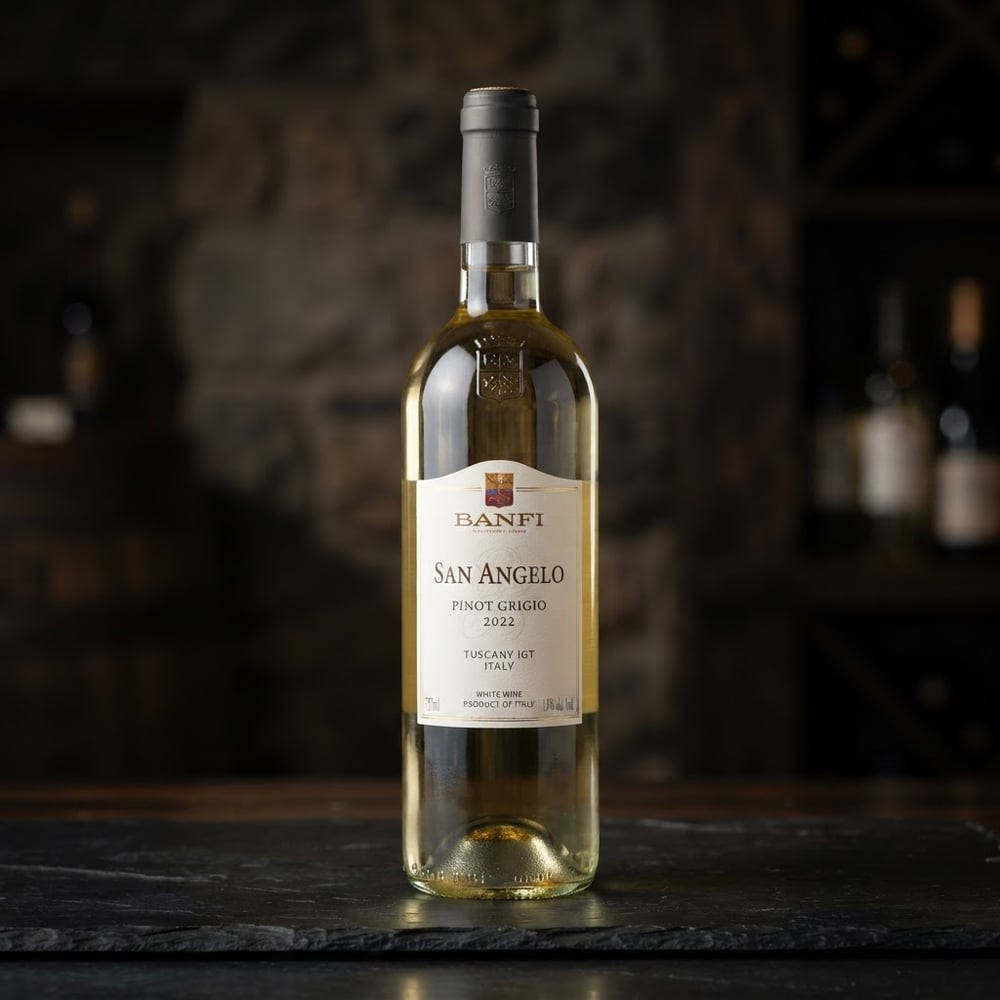
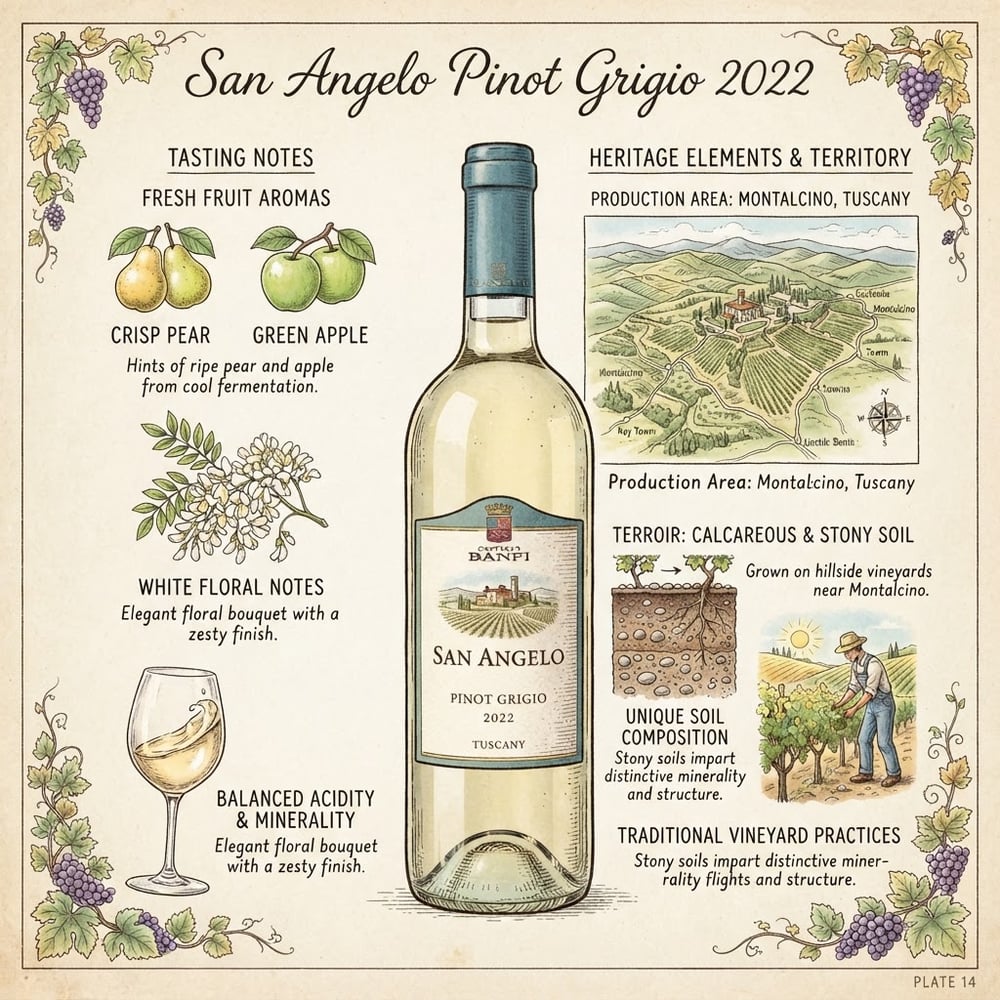
Pinot Grigio is a grape that almost always gets picked early and fermented fast, and most of it comes out tasting of very little. San Angelo is not that. Banfi grows it in Tuscany, well south of the Alpine foothills where the grape made its name, and the warmer site pushes the fruit further than the variety usually goes.
- Pinot Grigio, a mutation of Pinot Noir.
- Tuscany IGT, central Italy.
- 2022, a warm and generous vintage across Tuscany.
- Dry, light bodied, medium acidity.
- 12.5% alcohol, 750ml.
How it is made
Pinot Grigio is a grey-skinned grape, a colour mutation of Pinot Noir, and the skins carry a faint copper tint. In Italy the style is built on early picking and cool, slow fermentation in stainless steel, which keeps the wine pale and the fruit forward. Tuscany IGT is a broad appellation, so the grape is not tied to any single village or hillside.
How it tastes
Green apple and citrus lead, with white peach underneath and a faint almond note on the back end. Medium acidity holds it together and the finish stays crisp rather than soft. Light in the mouth, dry throughout, no sweetness to speak of.
Where it comes from
Pinot Grigio is grown all over northern Italy, but Tuscany gives it something different: more sun, riper fruit, and a rounder mid-palate than the leaner versions from Friuli or the Veneto. The grape keeps its freshness in the heat, which is why it travelled south at all.
Good to know
Pinot Grigio and Pinot Gris are the same grape. The French name is used in Alsace, where the wines are richer and often sweeter. Same vine, two very different ideas about what to do with it.